by
by 
Have you never set foot in the land of the Gaels? Or have you already been to Scotland, but did not have time to appreciate this absolutely charming “piece” of Great Britain, completely independent from it in administrative and political terms? Then here are 11 advantages that Scotland demonstrates when considering it as a unique country for a dream holiday!
1. General features that will definitely make an impression
International visitors who have visited Scotland at least briefly note how good this country is for its… mild climate!
Indeed, the temperature here in the coldest season (January and February) rarely drops below plus 7°C – in most regions of the Ukraine such a winter is simply a fairy tale! However, summer in Scotland is not like the southern summer in Ukraine as the heat in Scotland is only considered to be around 20 °C and as a rule the air does not warm up above this level in summer (July and August).
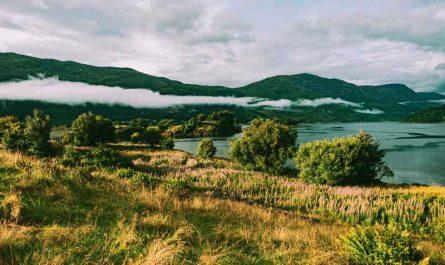
There is also a surprise here about fine days. More often than not, the skies of Scotland are completely covered with clouds, from which small or large drops fall from time to time. The rains here are interspersed with thick and dense fogs. Why not make it an excellent setting for mystical novels of the Middle Ages?

In addition to the absence of frost and suffocating heat, Scotland enchants with its mediaeval surroundings. Every stone here “breathes” an era of chivalry. What did you want, being in the country of “grey-haired” legends, in the country of ferocious Vikings, in the country of castles in which the echoes of past centuries can still be heard?
Important Feature
Get ready for the fact that the most interesting things in Scotland, as they say, are far from civilization, in remote settlements or even in wild and uninhabited places. To enjoy such wonders rent a vehicle!
2. “Not a soul”- the most deserted beach in Europe
There is a beach in Scotland that is not only sparsely populated, but has no people at all! Well, it’s true, the only living creatures along the coastline that can be found are walking ponies and dolphins splashing in the waves.

Of course, in comparison with Cala Macarella (Menorca), Balos (Crete), Rondinara (France) and other famous beaches in Europe, the beaches in Scotland are devoid of that stereotype that attracts vacationers who dream of soaking up the hot rays of the sun on snow-white sands … and the sea in Scotland is unlikely to please with its warm waters – the North Sea never warms up like the Mediterranean or Aegean seas. Scotland is an inhospitable region from the standpoint of the usual resort values of hot countries and the average annual water temperature here is usually no higher than +7 °C.
However, despite the impossibility of walking in a swimsuit (extreme sports don’t count!) the beaches of Scotland can also delight you! Only tourists will admire the completely different delights that make up an introvert’s paradise:
- the “ringing” energy of “wild” places;
- the invigorating breeze of the Atlantic;
- extremely changeable weather (sun in the morning, storm in the evening);
- a unity with nature;
- the opportunity to be a shameless nudist; and
- meditation in absolute solitude.
This can be felt at the picturesque Scarista Beach, a beach located on the west of the Isle of Harris. This 100% wild beach, stretching for three kilometres, is located in a protected area protected by law. There are no shops, cafes or other objects of civilization nearby!
Scarista Beach can only be reached by ferry from Stornoway. Next is a 1.5 hour journey along serpentine roads and Scandinavian fields.
3. Tastes of whiskey and “heather honey”- tasting traditional Scottish drinks (21+)
Heather honey, “which is “sweeter than honey, drunker than wine,” sung in Scots ballads is not at all a sweet treat for kids! This is an original alcoholic drink, the recipe of which was kept secret for a long time.
In the Middle Ages ancient ale was prepared by fermenting honey dissolved in water extracted by bees from heather flowers. It once grew in huge “carpets” in Scotland, covering the plains and foothills of the mountains. In 1986, the recipe was finally worked out and heather honey began to be prepared in local breweries. The taste, colour and aroma of ale is specific, it is viscous and similar to liquid amber, smelling of the steppe and leaving an aftertaste very similar to that left by expensive wine.


Scotland’s other national alcoholic drink is whiskey. Well, where else can you drink it if not in its homeland? In bars you can drink varieties that are unlikely to reach Russia.
For those who not only taste, but also wish to become culturally enlightened, interesting excursions to distilleries can be organised. Here they prepare real scotch, after which “counterfeits” will be noticed “one, two, three.”
4. Wild salmon of gigantic size: fishing with a 100% catch
All Scots love fishing! And how can you not love such a pastime if the bite is excellent and the fish caught are surprisingly large?
See for yourself that fishing for big fish isn’t just about motorbikes – just visit a river like the Tweed which runs through the Scottish Borders. Surprisingly, large specimens of wild salmon and other red species are hooked here. The only thing you need to remember about the time of visiting the reservoir is that it is closed all Sunday.
5. Ghosts and the mystical atmosphere of castles
Everyone knows that there are ghosts in Scotland. Every child reading classic English fairy tales knows this!

Adults who are in a mystical mood can also tickle their nerves with the “stuffy” atmosphere, anticipating a meeting with “messengers” of the other world. Ghosts, according to local residents, have been repeatedly seen in old castles, cemeteries and underground labyrinths – there are plenty of them in Scotland.
First, you can study the ratings of the most nerve-wracking castles in Scotland. For example, the romantic and gloomy Cawdor. The dramas described in Shakespeare’s Lady Macbeth took place here. There were eyewitnesses before whom three appeared in Cawdor: John Campbell of Cawdor, some gentleman in a velvet doublet and an armless girl. All three people were… ghosts!
6. Ceilidh – Group Scottish dances for parties
After drinking whiskey or ale you will probably want to dance! So why not join the Scots as they rock their folk dance nights? The authentic atmosphere will amaze you with its colour and your legs will remember several pirouettes.
7. “Invincible Armada” with your own eyes – diving with an overview of sunken ships


In 1588, at the northernmost point of Scotland, 70 Spanish ships sank. There, under water, 51 ships of the German fleet have been peacefully “sleeping” since World War II. Is there anything interesting there that divers have not yet brought to land? They say yes and in huge quantities!
The underwater treasure hunting season is open from June to August.
8. Fire Vikings – a festival that makes you dream about the past
It turns out that the Vikings are still… alive! At least in the town of Lerwick. Every January there is a very atmospheric and eerily realistic festival with the participation of hundreds of bearded brutal men dressed approximately in what the harsh Vikings wore. With a very believable roar from the crowd, the legendary “characters” drag their colourful ships down the street to set them on fire while the crowd dances and roars.
9. In the footsteps of Harry Potter – the train to Hogwarts exists!
In the warmer months it will be a great pleasure to watch the Hogwarts Express – the famous train in which Harry Potter travelled to the Academy rushes through the picturesque meadows of Scotland delighting children and adults alike.
10. “Don’t tear my soul oh bagpipes!”
The sobbing sounds of bagpipes should, in theory, not scare you away out of habit, but attract and lure you closer! If you hear it and it is loud, strange and sometimes frightening, rush towards this heartbreaking sound! It is an indescribable bagpipe performance which should be enjoyed in a relaxed manner and for a long time. By the way, Scottish musicians willingly let you blow their instrument!
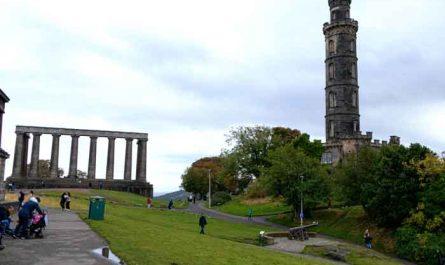
11. Mountain “Saddle” or “Arthur’s Seat”
In the centre of Edinburgh’s National Park is a landmark that those who have read the legend about the magical island of Avalon and the legendary Camelot Castle come to see. The mortally wounded King Arthur died here, but his soul still wanders in the vicinity of the mountain and it is named after this valiant sir.
Arthur, of course, may not be met, but from a height of 251 metres there are stunning panoramic views of the bay.