'/%3E%3C/svg%3E)


 by
by 
James Watt, kilt and whiskey – expensive gifts to the world from Scotland
Without exaggeration, every state stands out from the rest in at least some way. And some countries even “manage” to gift others with their unique inventions and phenomena that become global property.
Scotland is just such a country: the most brilliant people were born in it and amazing objects were invented, which are enjoyed not only by neighbors on the border, but also by people from remote places around the globe. So let’s talk about this today!
His Majesty…Scotch Whiskey
International experts of strong alcohol and simply its connoisseurs believe that the best whiskey is produced by the Land of the Gaels, i.e. Scotland (lat. Scotia). Well, in this case there are no “taste” or biased judgments: Scotch scotch truly has no equal! The national drink with a standard strength of 40 degrees, with an easily recognizable geographical name, which is enshrined in law, is protected “on all fronts” by the legislation of three legal entities:
-
Great Britain itself;
-
European Union;
-
World Trade Organization.
How whiskey production began in Scotland

Exchequer Tax Records, the earliest surviving written record of Scotch whisky, place it in production no later than 1494. Then “Water of Life” – this is how the authentic name of the intoxicating drink uisge beatha was literally translated from Gaelic, and, as today, it was made from natural malted barley grain.
The very first specialists who “propelled” the distillate from barley malt were monks. They had neither precise scientific knowledge nor the special equipment that modern distilleries have. This is why the Scotch whiskey of the Middle Ages (up to the 17th century) and the one produced in Scotland today are two very different! The first was much stronger and more poisonous: the monks had no idea about fusel oils and other toxic compounds present in alcohol.
Key features of the drink
Since the technology of scotch production has been significantly modernized over 6 centuries, despite the traditions carefully preserved by the Scots, the taste and aroma of the legendary drink has incredibly deepened, enriched and improved. Today, Scottish distilleries produce five categories of whiskey: single malt, grain, blended, blended malt and blended grain.
All drink categories are characterized by the simultaneous presence of 8 specific features that determine the originality of the product:
-
contains only water and whole grain malted barley (whole grains of corn, wheat and other grains can be added);
-
cereals must be processed exclusively with the help of endogenous enzymes into a substrate capable of alcoholic fermentation;
-
fermentation of raw materials is allowed only with the use of yeast cultures;
-
whiskey is distilled with a residual alcohol content of less than 94.8%, and the final product of distillation must demonstrate the color, taste and aroma inherent in the primary raw material;
-
the minimum strength is 40%;
-
aging (maturation) takes place in a regulated excise warehouse in Scotland, in oak barrels with a maximum volume of 700 liters;
-
ripening period of at least three years;
-
There are only two additives to mature whiskey – water and alcohol caramel (burnt sugar).
Kilt: a “skirt” for mature, stern men
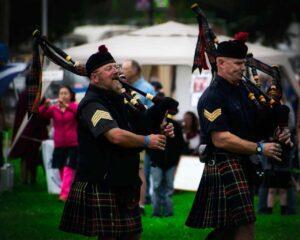
The popularity of the kilt was facilitated by the acute popularity of the novels of Walter Scott, also a full-blooded Scot, who invented the genre of the historical novel. In them, the famous writer colorfully described courageous heroes dressed in tartan, a purely Scottish fabric with an ornament of horizontal and vertical stripes (the so-called “tartan”), “skirts”.
The English noun kilt is believed to be a phonetic version of the Scottish verb meaning the act of wrapping clothing around the body. The second version of the philological explanation of the origin of the name is the Old Icelandic adjective “kjilt”, translated into Russian as “folded”.
Historical nuances
This is an exclusively men’s item of clothing, and a national one, traditionally intended for residents of the mountainous regions of Scotland. The origins of the tradition go back to the year 1594, and even earlier: this is the date of the earliest written description of the kilt as a speckled outer garment made of thick woolen fabric, with many folds, a belt and worn across the legs.
You shouldn’t be surprised by such a strange men’s wardrobe: there is reliable evidence that the Vikings wore pleated tartan clothing.
What is a kilt, which is made using a tartan with a unique pattern, officially assigned to a specific military unit, clan or family?
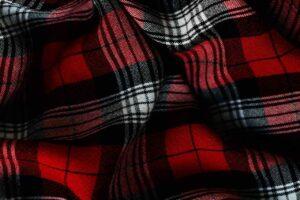
At the same time, the very tradition of wearing a kilt, as well as the tabulated culture of wearing it, developed only in the middle of the 19th century: it was then that the fashion for a pleated men’s skirt arose, which began to be worn by the Scottish intelligentsia and the nobility – residents of the mountains or their immigrants. Soon the fashion for the kilt “spread” to the inhabitants of the plains, and then the foreign Scottish diaspora also donned kilts. Moreover! Non-Scots also began to wear the kilt: Maine residents, Irish and Welsh.
Design features of the garment
It is believed that the prototype of the kilt is an ordinary plaid – wide and very long. Actually, even modern versions of the kilt are a plaid, draped in folds and folds.
Sometimes the kilt has a belt sewn on it, and sometimes the fabric is simply wrapped around the waist and secured there with several buckled straps. As a rule, men add a sporrant to their kilt – a special handbag in which it is very convenient to carry all sorts of small things.
Secrets of the kilt’s popularity
It’s not just that the inhabitants of the Highlands – Highland Scotland – started wearing kilts ! This area with mountainous terrain has a specific climate: cold and very rainy. That’s why a large woolen blanket has become a real salvation from dampness and chilliness!
Natural wool dried quickly right on the body, and the specific “cut” did not at all hinder the man’s sweeping steps. At night, the kilt was removed and used as a warm blanket – if the night found its owner far from home. Even in case of danger, the kilt could be thrown off in one movement and rushed into battle naked, but completely free. Or throw one of its parts over your shoulder when the wind is strong. Classic pants could never boast of such advantages.
The time when the kilt was banned
For 36 years, the courageous highlanders were deprived of the pleasure of wearing a skirt or any other clothing made of tartan. The reason is the suppression of the Jacobite uprising in 1746. This punitive measure was adopted by Great Britain for educational purposes. The only relief was only for the British army: they still, officially, wore plaids and other national clothes.
How do the Scots wear a kilt today?
Coming to Scotland and meeting locals on the streets simply flaunting a kilt, as in an ordinary business suit or casual wear, is a rare occurrence. Usually the kilt is worn at weddings and other holidays, as a national costume.
If you want to see a Scot in a kilt, it’s better to go to national musical performances and sports competitions. Another option to see a kilt on a living person is to go to the nearest part of the British army, to its parade or ceremonial review. There, this is the usual military uniform, adopted by regulations during the Second World War.
James Watt: a gifted inventor, whose name was given to a unit of electric current power for the first time in the history of technology
On January 19, 1736, James Watt was born in Greenock, Scotland, a gifted mechanical engineer, inventor of an improved, easy-to-control and highly efficient steam engine, member of the Royal Society of London (elected in 1787), honorary doctor of laws from the University of Glasgow (1806).
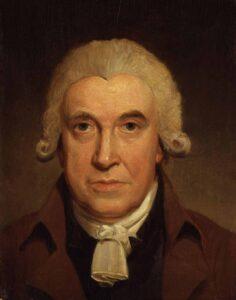
This worthy citizen of Great Britain brought her fame thanks to his outstanding ideas and their implementation. Thus, D. Watt invented and patented:
-
isolated condensation chamber (1769);
-
method of planetary motion (1871);
-
machine for copying sculptures (1818);
-
double-acting steam engine (1782), etc.
The achievements of the erudite Master Inventor were highly appreciated both during his lifetime and posthumously by the English government. Thus, D. Watt was offered the title of baron in 1815 (but the offer was not accepted and politely declined), and in May 2009, in honor of Watt, the Bank of England issued a £50 banknote, which is now in circulation, with the image of Watt and his sponsor-partner Bolton.
In addition, Watt was a member of an unofficial learned society of prominent figures of the British Enlightenment – the Lunar Society, which united intellectuals, industrialists and natural philosophers who met in Birmingham.
There is even a crater on the visible side of the Moon, named in 1935 in honor of the inventor by the International Astronomical Union.