by
by 
Elie and Earlsferry
My wonderful walk
And again – hello guests and subscribers to our blog!
It is great dry weather today, friends! So I walk slowly along the surprisingly clean and uncrowded streets of Elie – one of two old, old villages that, in 1930, formed a new royal burgh and after the name “royal burgh” was abolished in 1975 it simply became another coastal Scottish city, beckoning with its authenticity to those who like to “look into the past”. For those who don’t know, I’m in County Fife in the East Neuk area, the northern coast of the Firth of Forth.
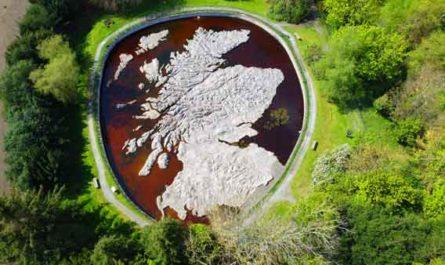
Oh, how friendly Elie greets me, despite the sun hiding behind the clouds! It’s as if they are always ready to welcome guests – they even have a map of the area so that no one gets lost. By the way, they say the name of the village is not a woman’s name. The placename “Elie” is derived from the Gaelic noun “ealadh” which has been translated in various ways. Some say that Elie means “grave,” but I prefer the poetic phrase “rocky place.”


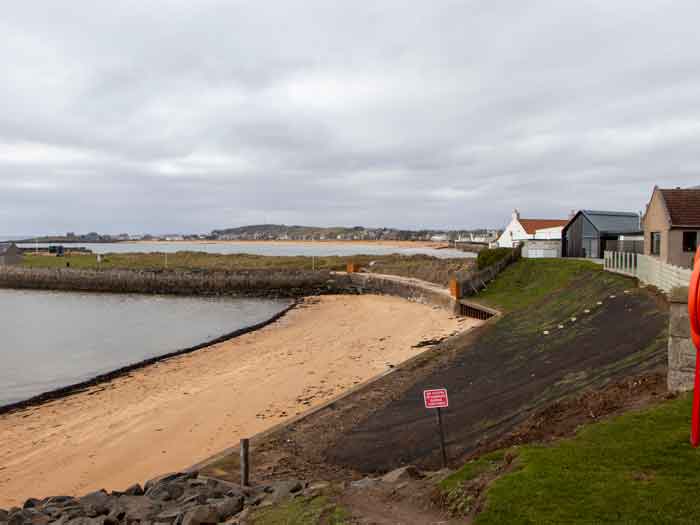
I approach the embankment, finally reaching the beach, admiring the colourful buildings. By the way, I feel it long before I see it: the close presence of the bay is “given away” by the salty fresh wind blowing from it and the inviting splash of the waves reaching the village.
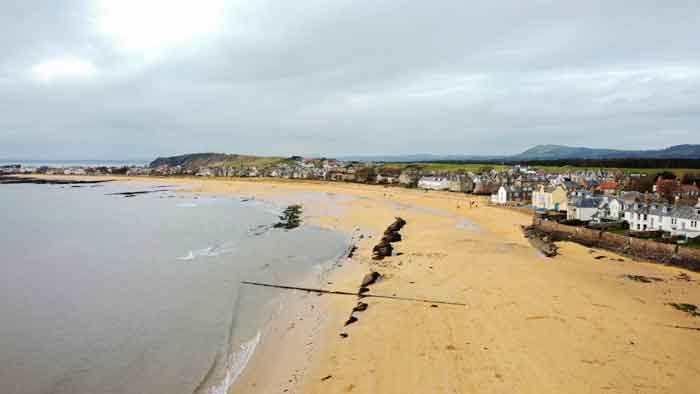
And here it is…the beach.
Is it true that everywhere you look – even at the surface of pleased. er, even at the low buildings adjacent to the coast – the eye is always pleased. The views are gorgeous and everything here is in harmony with each other: the light delicate colours of the houses, the grey tiles of the roofs, the mustard yellow sand and, of course, the leaden blue of the Firth of Forth.
Have you also noticed that there are no high-rise buildings in Elie? The lack of modern architecture makes the city truly fabulous – like a revived illustration from a book of medieval legends. At least, this is the feeling charming Elie gives me.
Golden Sands
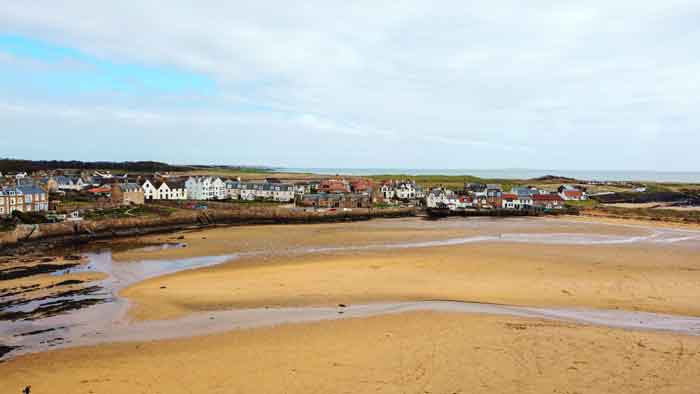
The houses here are very, very colourful – they transform the space around them, distorting time and turning it back.
Well, the spacious part of the village spreads out on the left, is my second love at first sight today. It is where the cheerful cry of seagulls comes from, the unbridled elements of salt water, wind and sand rage. Due to the fact that today is cloudy and the sky is covered with blue clouds, water and air have merged into one single colour scheme which occupies the entire horizon. It feels like the sea is everywhere – above your head and under your feet, filling all the space where your eyes can reach.
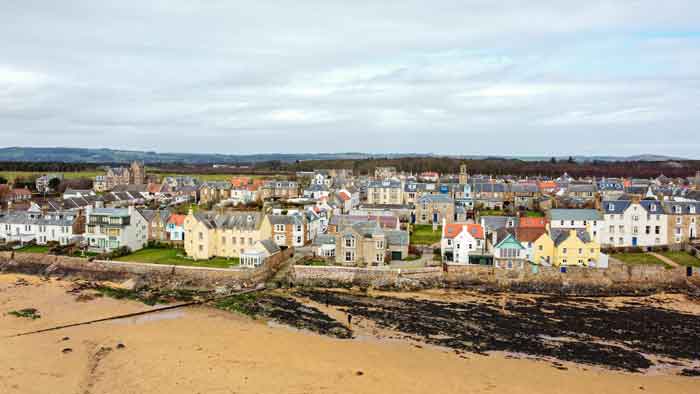
Well, what can I say friends, here they treat the incomparable beautiful nature very carefully and reverently and for this I give a special “thank you”. The embankment is comfortable for everyone – both fishing seagulls and people take a break from the hustle and bustle. And even those like me – seekers of thrilling experiences – have something to “profit” from: I’m going to go as close as possible to the obviously icy water. I am convinced that it cannot be any other way: today the waves of the Firth of Forth are exactly the same as they were 200, 300 and 700 years ago.
According to the data that I found on the internet, this cosy settlement is at least one thousand years old! Imagine, in 1054 a certain Macduff, Earl of Fife, crossed the bay to save his life from King Macbeth. But by that time there was already a village here – no one knows when it was built. However, thanks to the fact that local fishermen helped Macduff cross and provided him with shelter, the place received the very influential status of “Royal Burgh” in gratitude.
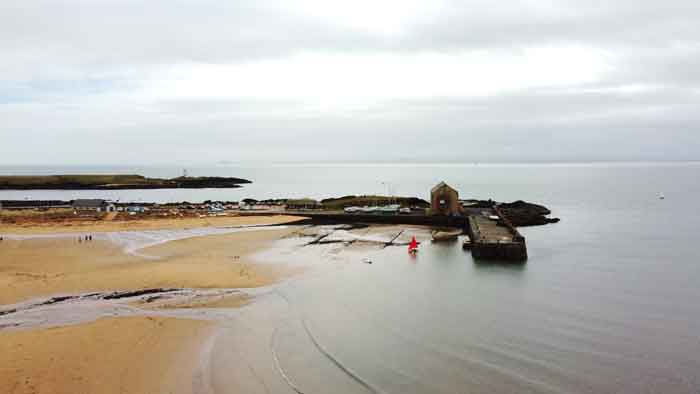
About 100 years later, the Fife dynasty built a seven-mile ferry crossing here through which pilgrims crossed the Firth of Forth to Elie, dreaming of getting to the Church of St. Andrew the Apostle (it is located in St. Andrews, the so-called world centre of golf).
I hope you have the same feelings as me? Do you also catch yourself thinking that you are looking at a landscape that draws you into looking at yourself deeper and deeper just like a magnet?
I break out of the hypnotic captivity of contemplating the beauty of the North Sea with an effort of will and go back to more or less dry sand.
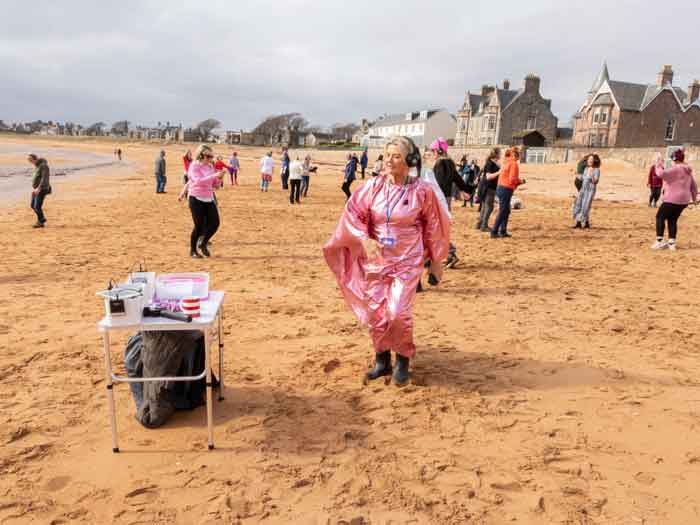
Oh you! And here, on the beach, it turns out wild fun began – while I was enthusiastically looking at the town from the bay and from the air! What is called, “Everyone is dancing!!!” happened – both old and young took off their outer clothes and started dancing! Taking a closer look, I see that everyone is dancing selflessly – with headphones! Don’t be surprised, this is local fun – “Silent disco”, “silent disco”. People dance to the music, which is transmitted through Wi-Fi headphones, surrendering to the rhythm on, perhaps, the most exotic dance floor on Earth!
I’m going back
Terraces
After moving a little in time to the cry of the seagulls and the laughter of the “disco dancers,” I wander back to the residential areas of Elie. Of course, I have to force myself to go up, my feet get stuck in the sand and don’t want to turn towards the city. But there are so many interesting things waiting for me there!
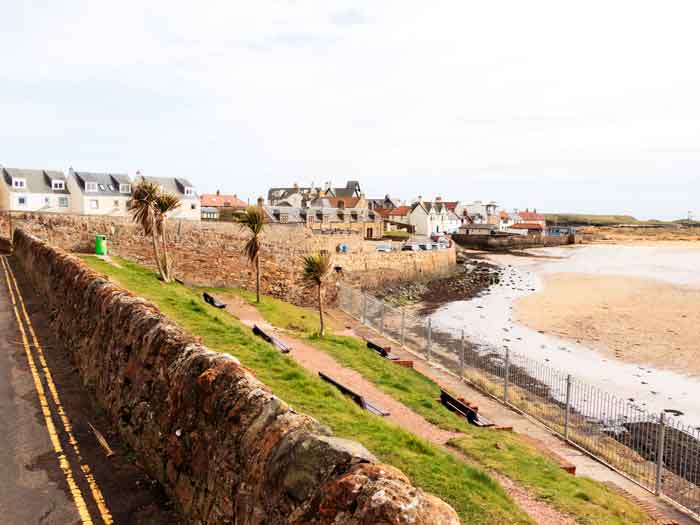
Walking along Terras, I purposefully walk deeper into the village, simultaneously examining its architecture. My God, how organic everything is here! I can imagine how incredibly comfortable it is to drink tea in such houses, warm yourself by the fireplace and look through the lattice window at the steel-coloured bay!
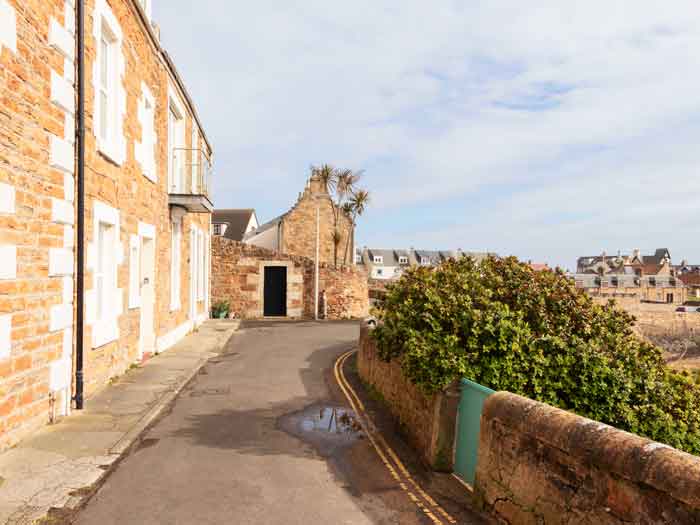
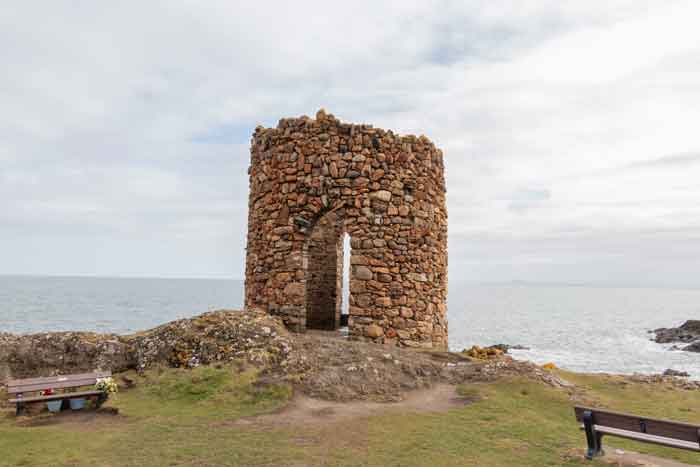
All the “Terases” are over, that’s the name of the place where I’m walking – Terraces and the coastline opens up before me again – it looks completely different, neater or something. Here, it’s as if a door to the Middle Ages has opened and, seeing a cylinder protruding over the cliff, I quicken my pace.
Lady Tower
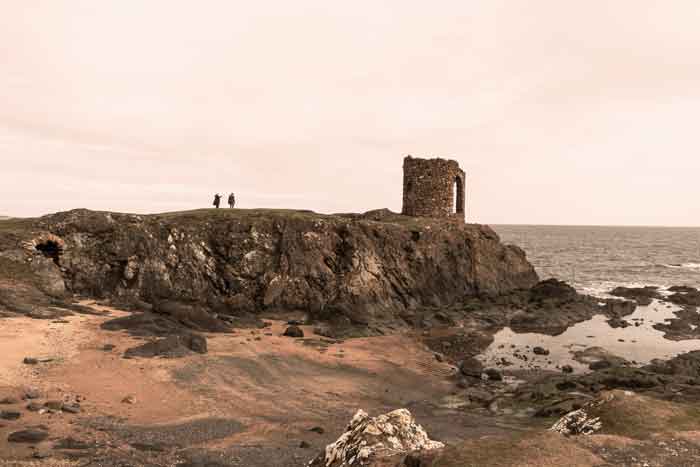
Here it is, Lady Tower! Do you see the arches characteristic of the era of knights? The ancient structure is well preserved, although at that time nothing had been heard of branded cement—skilled craftsmen laid wild stone without mortar. The energy next to the tower is extremely powerful; it is immediately clear that this is a centuries-old artefact with a rich history. It was built for Lady Janet Anstruther in 1770 and she loved to sit and watch the sea and relax after swimming. She also loved solitude and when she was going to swim she sent special people through the streets of Elie to ring the bell, warning the townspeople to stay away.

Lighthouse
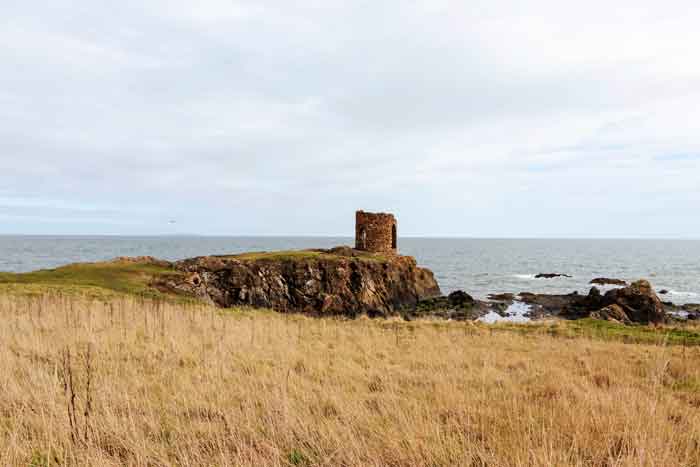
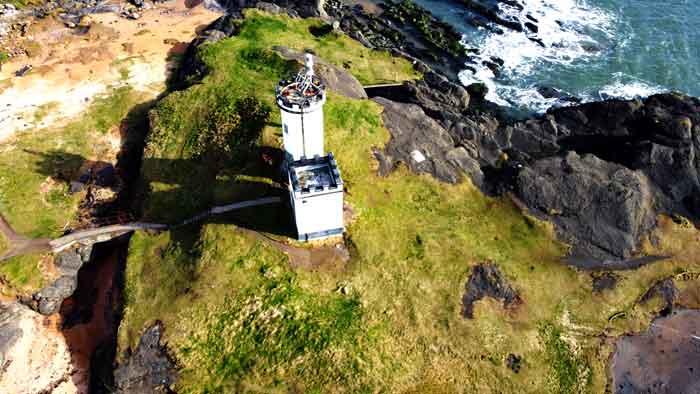
Well, now the second point of visiting the sights of Elie: I’m going to see the lighthouse. Outwardly it looks a lot like the scenery from the book about King Arthur with the same jagged recesses at the top. There is no way here without a lighthouse: the rocks here are very crooked on the approach to the water.


Well, that’s all, I regretfully turn home, my walk has come to an end! Goodbye Elie, we will definitely meet again…