by
by 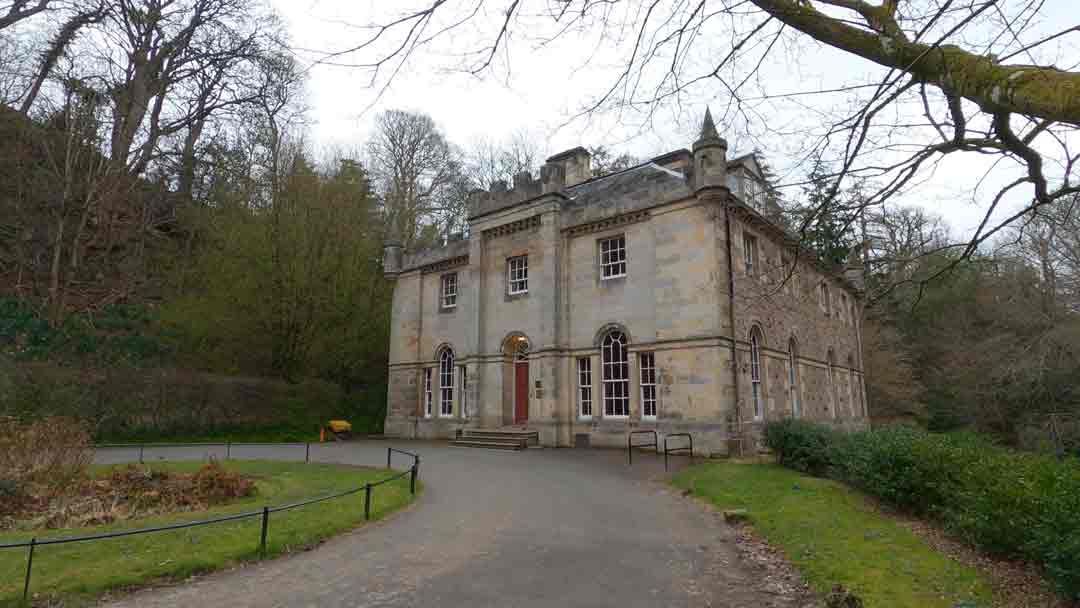
WALKING TO BRAID HILLS
And now spring has come and we go out for walks again and continue our adventures in the fresh air. And today, in such beautiful, sunny, but windy weather, we will rise to another hill, but within the city limits of Edinburgh which is called Braid Hills or Braid Hills Nature Reserve.
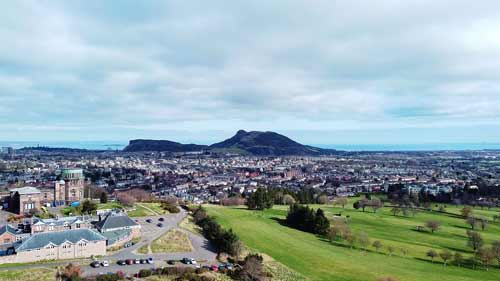
The climb itself is certainly not as difficult as the last time we walked in the Pentland, but you must still try.
The route itself is located within the city limits, but it is quiet and secluded although this is not evident from the number of people.
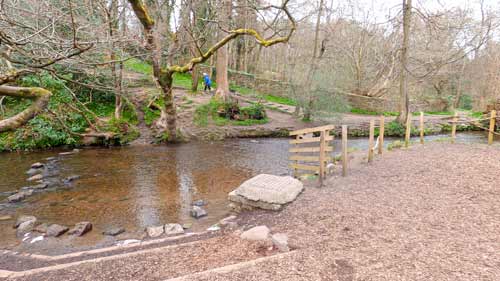
We move straight along the path, between tall trees, and the Braid Burn stream runs nearby. This stream is 14 kilometres long and the area of the entire basin is 30.5 kilometres. The stream is inhabited by goby and sometimes otters.
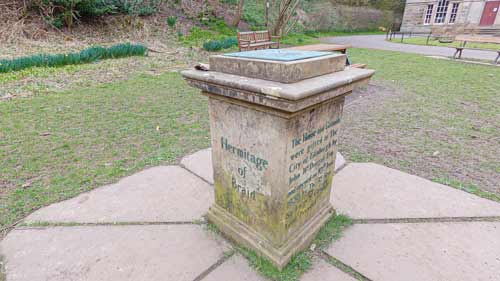
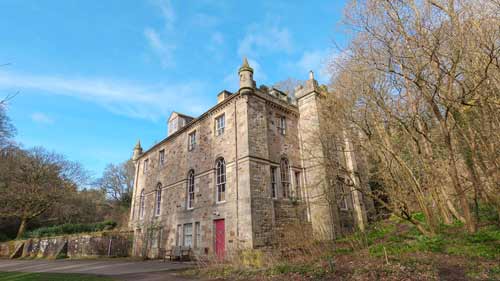
And so we come to one of the attractions of this route – Hermitage House. Hermitage House is a magnificent example of eighteenth-century architecture. It was built in 1785. Now it houses the tourist centre of the route.
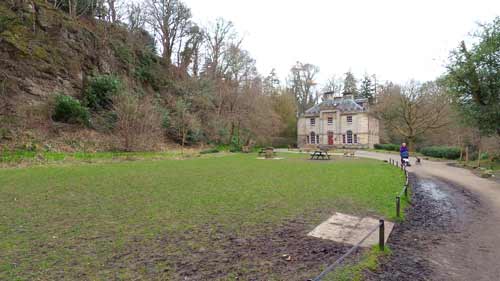

And how many dog breeders and their dogs are ahead? That’s where the freedom lies.
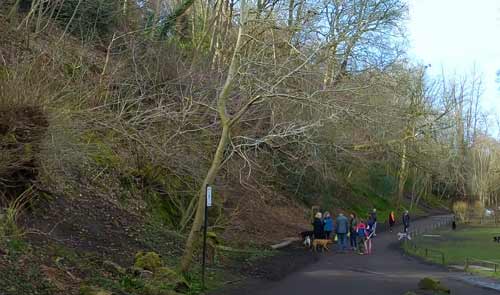
Turn left and continue until the fork.
What is this on our way? A small pointed arched doorway, thick bushes and a pointed arched lattice gate. And this is the Underground Ice House, built from cobblestones, south of Hermitage Braid. It is connected to Hermitage House via a drainage canal.
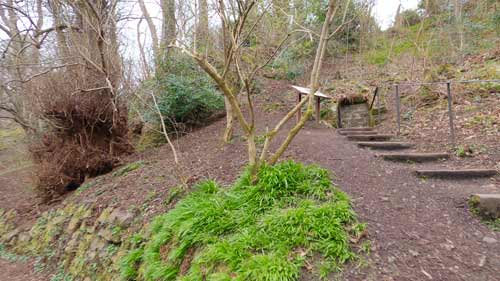
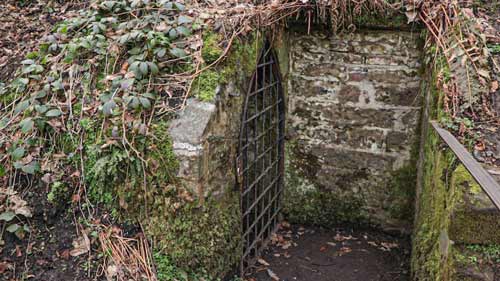
Our task is to reach the fork as written in the guidebook and then climb the hill itself.
And now there is a fork and you can start climbing the stairs. And at the top there should be stunning views.
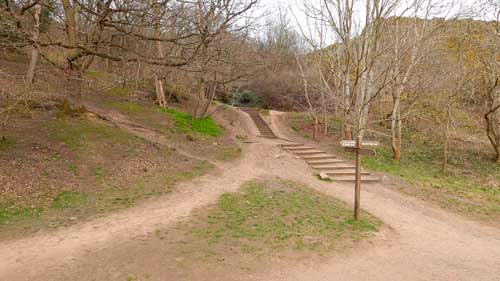
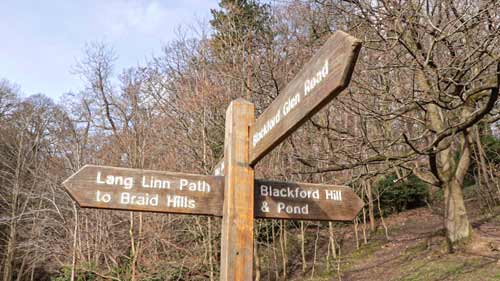
The first part of the route has been completed or rather, we are approaching the Royal Observatory.

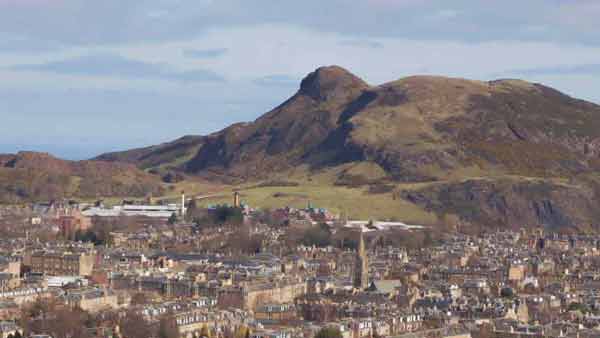
The Royal Observatory of Edinburgh is unique among British scientific institutions in that it is the only site to host a university astronomy research group, a Research Council UK facility and a visitor centre. It was opened in 1896. This was made possible thanks to the generosity of James Louis Lindsay, 26th Earl of Crawford and 9th Earl of Balcarres, a keen and extremely wealthy amateur astronomer who left his instruments and library to the Scottish people – now forming the world-famous Crawford Collection. The location of the observatory provides spectacular views of the city, Salisbury Cliffs and Arthur’s Seat.
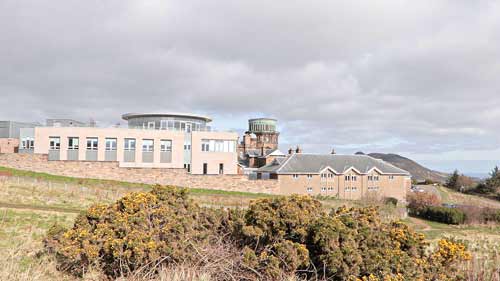
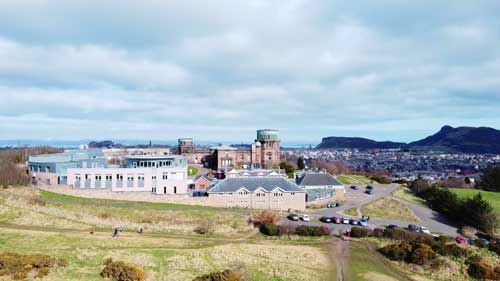
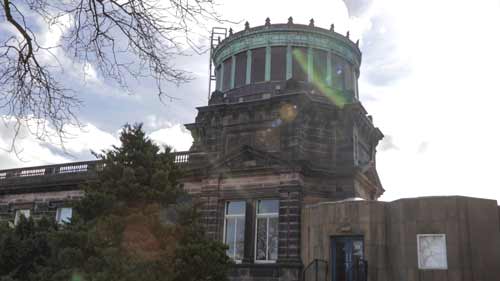
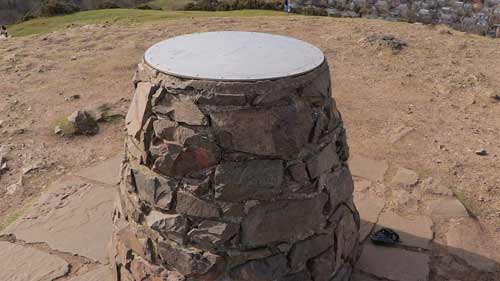
And now that we have gone around the observatory let’s go to the final point of the route which is called the Blackford Hills Summit, a triangulation point, or rather, the Top of the Hill. But first, let’s climb another small hill, this is also a vantage point for the surrounding area. And if we don’t break our arms or legs there then we’ll definitely get to triangulation.
The descent is problematic as always, but … it’s possible to bypass it.
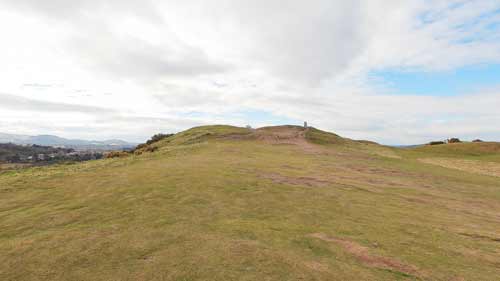
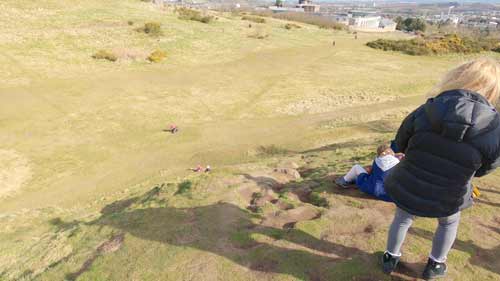
The Braid Hills form a high relief on the south side of Edinburgh, south of Blackford Hill and Braid Hermitage. The latter is a valley which was carved by glacial meltwater about 15,000 years ago. The topography and shape of the hills is as a result of ice erosion of resistant volcanic rocks during the last glaciation forming the classic “rock and tail” feature. The ice moved from west to east forming steep, rocky western slopes as the ice was forced around and over the hill and then down a gentle slope (“tail”) on the eastern side. From the top you can see the whole of Edinburgh with all its important geological features. It also offers wonderful views of the Pentland and Lammermuir hills. And … we enjoy views that describe the evolution of Edinburgh’s landscape over the past 600 million years.
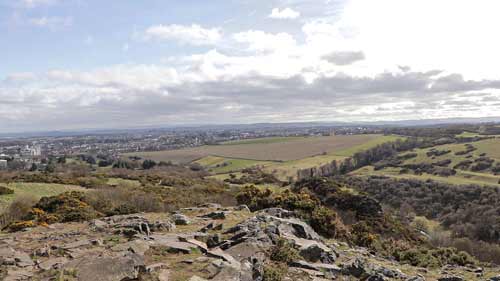
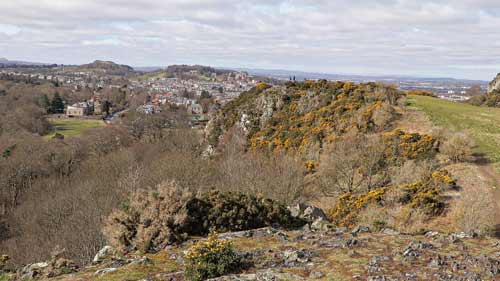
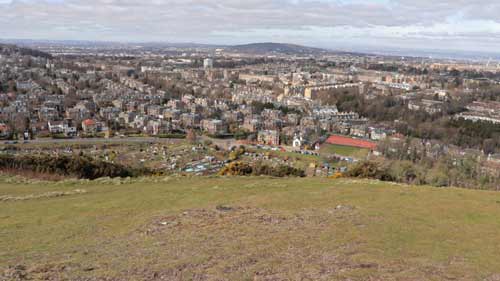
Here we are at the highest point of the route.
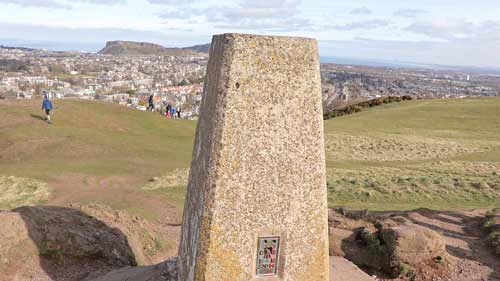

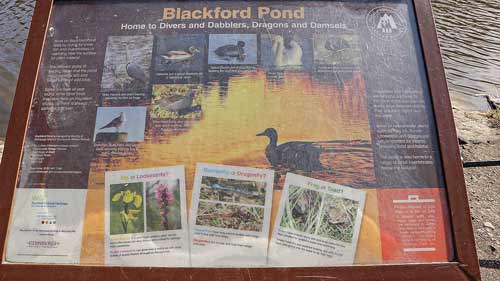
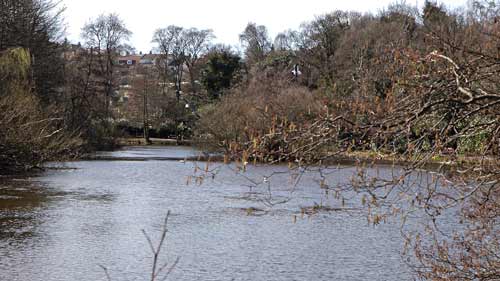
And now the final part of the walk, but this is not the end. Let’s go down to the pond. It’s a pleasure to walk around the pond in such good weather.