


 by
by 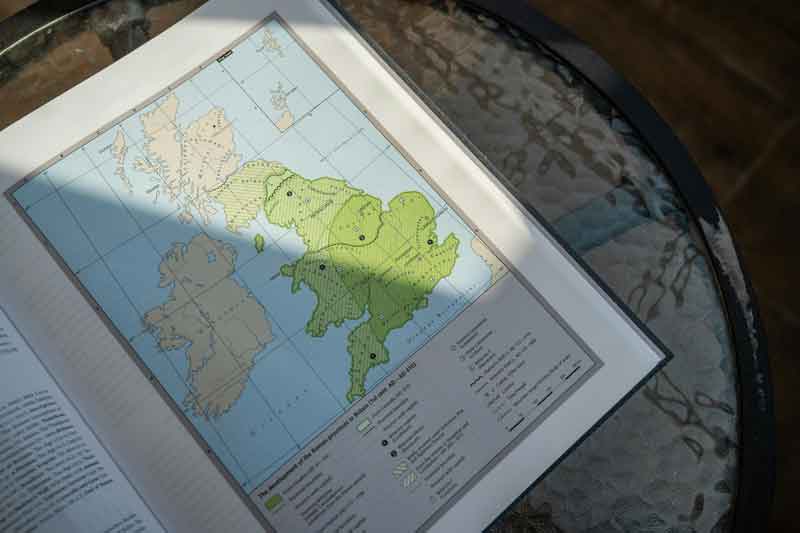
Conquest of Wales, Northern England and Scotland
An important period in the history of the conquest of Britain by Rome is the time of the military campaign led by the commander Gnaeus Julius Agricola. Agricola was appointed governor of Britain in 77 AD. He quickly and successfully conquered the Welsh tribes including those in Anglesey. To consolidate success already achieved, Agricola placed the twentieth legion in a camp on the River Dee. This place became one of the most important Roman fortifications in all of Britain. The modern name of the Dee camp is Chester.
Territories in the north of England came under Agricola’s control in the period 78 – 79 AD. Defensive outposts were established at the narrowest point in Scotland in 80 AD stretching from the Clyde to Fort ……
Agricola continued north into the wild lands of Caledonia (modern Scotland). A major military battle took place in 83 AD when the Romans fought the Caledonians near Mons Graupius. The Roman legions won the most significant victory in what is now Scotland. It became the furthest point in Roman Britain and Agricola was considered the conqueror of all Britons. Agricola’s conquests resulted in the conquest of Wales, northern England and Scotland.

During the seven years that Agricola ruled the conquered territories of Roman Britain roads were built and numerous defensive structures were erected. The Romans actively introduced the Celts throughout the island to the attributes of luxury that reigned in Rome. Lavish banquets and celebrations were held and people were invited to luxurious baths. With such gestures the commander not only wanted to charm the tribal people, but also to distract their attention from the further advance of Roman legions into the interior of the island.
Agricola also planned to conquer the mountainous part of Scotland and Ireland. However, he did not achieve success in this matter. Firstly, this land with its special natural landscape and climate was very well defended by warlike inhabitants and, secondly, military tasks in other areas required the distraction of the military and the withdrawal of troops. As a result, Ireland remained a land not conquered by the Romans.
Later Agricola was recalled to Rome and Sallustius Lucullus took his place.
Construction of Hadrian’s Wall
After the conquest of Scotland the Romans faced a clear need to define their borders. Hadrian became the emperor of Rome in 117 AD and his goal was to strengthen existing borders and to abandon the expansion of the Roman Empire into Britain.
Construction began on a defensive fortification known as Hadrian’s Wall or the Roman Wall in 122 AD. It connected the two opposite ends of the island across its entire width from Wallsend on the River Rhine in the east to Bowness-on-Solway in the west. In addition to its function as a border the wall had several other important functions. It protected Roman territories from raids by northern tribes and also served as a customs gate for trade transactions. It took the Romans about eight years to build the stone defensive structure. This mighty wall was 117.5km long. Part of the wall has survived to this day and is recognized as the largest archaeological site in Britain and is a symbol of British culture. Hadrian’s Wall was added to the UNESCO World Heritage List in 1987.
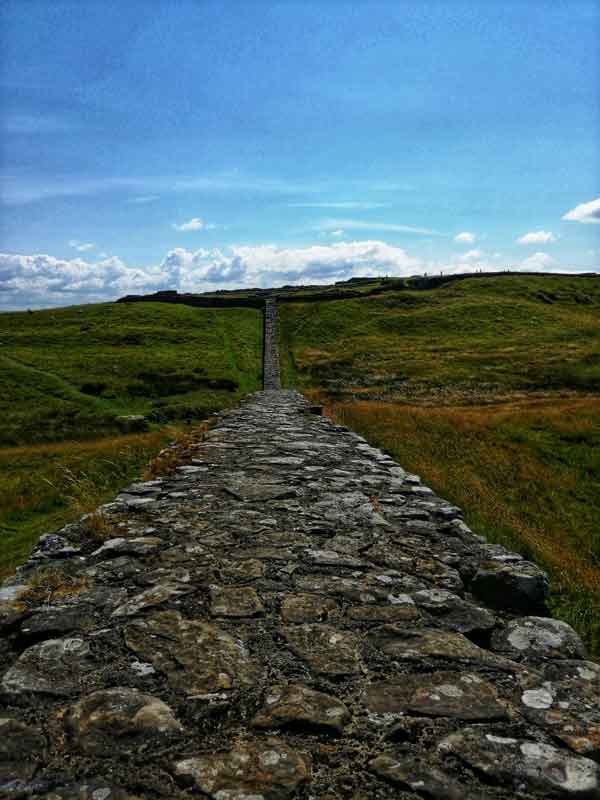

The Roman wall was the northernmost boundary of Roman Britain separating the conquered territories from independent Caledonia (Scotland).

Construction of the Antonine Wall
Quintus Lollius Urbicus became the new governor of Roman Britain by appointment of the Emperor Antoninus Pius in 138 AD. Upon his accession to the throne Antoninus Pius did not follow Hadrian’s policy and soon ordered a new conquest of Scotland as a result of which Urbicus was ordered to move to the north of the island.
The Antonine Wall was built during the reign of Pius which was located north of Hadrian’s Wall. Construction of the defensive border began in 142 AD. This structure was a rampart with a stone foundation 63km long which ran along the narrowest part of Scotland from the Firth of Forth to the Firth of Clyde. The wall was 3m high and 5m wide. To increase the security of the structure, a ditch was dug on its northern side, filled with a wooden palisade and then camouflaged with turf. It took about 20 years to build the wall. As a result, it became the northernmost section of the border of the Roman Empire.
The Antonine Wall had several functions. First, it provided reliable protection against Caledonian raids. The rampart separated the neighbouring Martians and the Caledonian tribes creating a buffer and preventing rebellion by the unconquered inhabitants of the island. Second, it became easier for Roman troops to move from east to west.
Despite the fact that the commander Urbicus achieved considerable military successes during his reign, after 160 AD the Antonine Wall had to be abandoned and the Roman garrisons were again thrown back to Hadrian’s Wall.
Completion of the conquest of Scotland
Hadrian’s Wall once again became the Roman border in Scotland. Until the 180’s AD, the forts to the southwest of the structure were used by the Romans as they continued to attempt to conquer northern Caledonia. The Romans made at least four more major attempts to subjugate the area. One of the largest was the invasion of 209 AD. The military campaign against the Caledonian Confederation was launched by Emperor Septimius Severus. The invasion involved an army of 40,000 Romans. One of the Roman historians, Dio Cassius, claims that Severus committed a real genocide while suffering a significant loss of his own soldiers.
Severus had achieved considerable success by 210 AD, but in 211 AD the general died in Eboracum after an illness.
His son Caracalla initially continued the conquest of Scotland, but soon made peace with the Caledonians. The Roman legions retreated to Hadrian’s Wall and never invaded the interior of the island again. Caracalla was the last military leader to attempt to occupy territory in Scotland. Once again, Hadrian’s Wall became the northern boundary of Roman Britain.


