


 by
by 
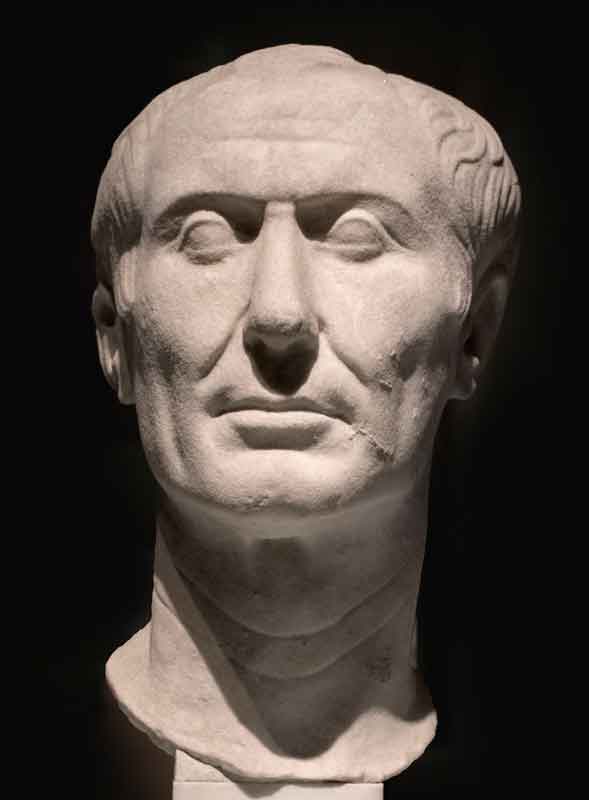
After Gaul was conquered in the middle of the 1st century BC, Julius Caesar made the decision to invade Britain so that he could rule over new lands which were still unknown to the Roman conquerors. In the years 55 and 54BC he twice gathered troops in order to invade Britain, but failed both times.
The first invasion involved two legions, but they only managed to land on the coast of Kent.
Caesar set out on his second campaign with 628 ships, five legions and 2,000 cavalry. The Celtic tribes were unable to repel such a large force at the landing in Kent and this enabled Caesar’s army to advance inland to Middlesex and then to cross the Thames.
As a result of this campaign Mandubracius Trinovantes was appointed as client king and the Celtic commander was asked to surrender to Rome.
The Roman campaigns led by Julius Caesar resulted in contact between the island tribes and Rome. At the same time the Trinovantes tribe became allies of Rome after they managed to withstand a rival Catuvellauni tribe thanks to the help of the Roman commander.

Cunobelinus ruled the Catuvellauni tribe during the reign of the emperors Augustus and Tiberius. He conquered the Trinovantes and other Celtic tribes and forced their rulers to flee to the court of Augustus. But Cunobelinus died in 40BC and the reign passed to his sons Caratacus and Togodumnus. Cunobelinus’ third son, Amminius quarreled with his father and afterwards fled to the emperor Caligula and asked him for help. From that moment on the Roman Empire had an excuse to invade the islands with which Rome was trading at the time.

The Roman campaign against Britain in 43AD
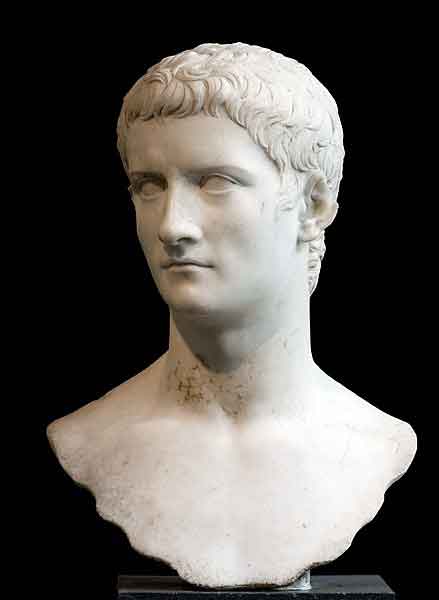
Caligula attempted to conquer the islands in 40AD. But when the Roman army approached the English Channel a mutiny began. The military was afraid of the unknown power of the sea so they refused to cross the gulf. In AD41 the emperor Caligula was killed and Claudius took the throne.
In order to consolidate his power and increase his might in the eyes of Roman nobility, Claudius decided to impose a tribute on the Britons living on the islands. In addition, the conquest of these lands promised Rome economic benefits since grain, metal, fish and valuable breeds of hunting dog could be exported from the islands. A new fleet was sent to Britain under the command of General Aulus Plautius. The four-legion army was recruited mainly from Italy, Spain and Gaul.
After landing on the island Roman troops engaged in fierce battles with the Britons commanded by Caratacus. Despite fierce resistance from the islanders, the Romans managed to reach the Thames river and the emperor proclaimed himself the winner of the battle.
Emperor Claudius arrived in Britain with the Praetorian Guard and several elephants in August and stayed on the island for two weeks. He accepted the capitulation of 11 Celtic rulers in the city of Camulodunum after which he returned to Gaul victorious. Plautius remained to defend the conquered lands. Thus, by AD43 Rome had completely captured the southeast of Britain.
Eight years after this significant battle the Arch of Claudius was built on which the emperor’s words were carved which proclaimed that he was the first to conquer the barbarian tribes and accept the capitulation of eleven Celtic kings.
The establishment of Roman rule on the islands
In 43AD the southern part of the island up to the River Trent was under Roman control. However, the conquest of Britain did not end there. One of the outstanding commanders of that time was Vespasian who conquered about 20 British settlements and the Isle of Wight.
Vespasian won the battle with the help of Caratacus who led the Silurian tribe. In the same year (43AD) they entered the lands of Wales. The struggle was only completed in 51AD.
The commander Aulus Plautius returned to Rome in 47AD as his powers in his post had ended. By this time the Roman legions already occupied territory as far as the Humber River. Beyond the river, Cartimandua, Queen of the Brigantes ruled, who voluntarily recognized and allowed the power of Rome without entering into any battles or fights. Plautius became the governor of the land of the Catuvellauni who were given the status of Roman province of Britain with their capital known as Camulodunum.
The first years of Roman rule on the islands was marked primarily by the suppression of various uprisings among the people of Britain. Much time and effort was spent in capturing the Celtic fortress of Maiden Castle in Dorset. The Druids, who had dug in on the island of Anglesey, did not allow the Romans to rule peacefully either. However, after a long period of siege, the Druid stronghold fell.
The rebellion of Queen Boudica
In 60AD a most striking rebellion began under the leadership of Queen Boudica of the Iceni tribe who lived in the territory of modern Norfolk. Until this year the Iceni did not enter into any confrontation with the Roman Empire as they were loyal to it.
However, the Romans had inflicted a strong insult on the queen and her daughters, flogged her with whips and dishonoured the young girls. The Iceni did not forgive Rome for this incident and a rebellion began. Having gathered a large army, Queen Boudica advanced through the cities of Camulodunum, Londinium and Verulamium to fight the Roman legions. She burned settlements mercilessly and killed local residents along the way, leaving ashes and destruction behind.
The Romans, having learned of the rebellion, ended their campaign under Suetonius in Anglesey and began to transfer troops to meet the rebels. When the two armies met on a battlefield near London the Iceni outnumbered the Roman soldiers several times. According to sources 80,000 Britons died on the battlefield as compared with only 400 Romans and the Roman Empire won a stunning victory. Realizing that it was all over, Boudicca took poison and died.
This rebellion was the last on the south-eastern coast of England. But such an event caused colossal damage to a large number of the territories of the Roman province of Britain. In addition to the burned settlements and destruction, the demographic consequences of the rebellion were catastrophic. About 70-80,000 inhabitants of the province had died during the days of the rebellion.


