by
by 
It would seem it’s not the biggest country and it also has a very peculiar, one could say, unpleasant climate, customs which are strange to the amateur and, without exaggeration, excellent whisky…

Well, taking into account the last trump card, it is still a bit unlikely you would call unfamiliar Scotland your crystal dream.
But the harsh climate and the famous strong alcohol are not the only attractions of the marvellous, colourful and unlike any other land of the Gaels! Here, as they say, there are so many twists and turns that you get a gorgeous “cake” which immediately becomes your favourite dessert!
So, what is it that makes Scotland so immediately and permanently captivating? It’s worth talking about!
A generous contribution to the film industry and world literature
Scotland’s cultural air is saturated with the spirit of folklore. There is plenty of it throughout the many generations of Scots! Each epoch, starting from the year of the founding of this country (843AD) brought something special to the culture of the Scots. As a result, the same literature became a collection of invaluable works that have not lost their actual artistry to this day.
The very first “bricks” of Scotland’s literary heritage were tales and legends. We can name “Gododdin” written in the 6th century in old Welsh and “The Life of Columba” in the 7th century in Middle Irish to be among the surviving written monuments of Gaelic literature in the 21st century.
Ancient literary heritage included a professional lawyer, Walter Scott, who also became a writer and what a writer – a classical writer with world fame, the founder of the unprecedented genre of the “historical novel”! It is worth focusing on W. Scott. He was such an outstanding person that the Scots dedicated their best monuments to him!
W. Scott: the lawyer who enriched the classics of English prose



W. Scott had a phenomenal memory and became famous for immortal literary creations and his passion for collecting antiquities. He was keenly interested in the traditional ballads and tales of his homeland, Scotland, from childhood. He collected numerous folk ballads and legends about Scottish heroes of bygone times whilst travelling and being connected to a busy law practice.
W. Scott’s impressive card catalogue
As a novelist Sir Scott demonstrated amazing productivity! The gigantic assets of a professional lawyer addicted to the history of his native land include:
-
countless literary critical publications and stories.
-
28 large works in the genre of “historical novel”.
-
nine poems.
The first novel, which instantly gained enormous popularity by an honorary member of the Royal Society of Edinburgh, is called “Waverley; or, ’tis Sixty Years Since”. It was written in 1814 under the pseudonym Jedediah Cleishbotham. However, the real name was soon declassified by admirers who admired “Waverley”, but Scott himself admitted the authorship 13 years later in 1827.
Some of the amazing creative achievements of the famous Scottish lawyer include:
-
the original genre “historical novel”.
-
the discovery of Scotland to the world through unusually realistic novels.
-
that “Marmion” is the first novel in verse in world literature (1808).
-
that it focusses on the driving force of the people in historical evolution.
-
the revival of the historical memory of the people of Scotland.
-
the term “freelancer”, a completely new term for the 19th century, is a definition of a mercenary warrior of the Middle Ages that appeared in the novel “Ivanhoe” in 1819.
Walter Scott, immensely in love with the romance of the Middle Ages, transformed his estate “from the heart” into a castle of the 12th to 15th centuries architecturally and stylistically, adding Gothic aesthetics. The real prototypes were not at all beautiful. This quirk did not go unnoticed by the society that adored Scott and soon estates in the style of medieval castles were firmly in vogue among wealthy people in Scotland.
Other famous names in Scottish literature
Here are the big names of authors of Scottish origin who have become the most famous writers of our time and have written immortal novels, poems and stories that the whole world adores:
-
Sir Arthur Conan Doyle – “Sherlock Holmes”; “The Lost World”.
-
Irvine Welsh — «Trainspotting».
-
Archibald Joseph Cronin – “Brody’s Castle”, “The Citadel”, “Shannon’s Way”.
-
Robert Louis Stevenson – “Treasure Island”.
-
William McGonagall – “The Wreck of the Bridge on the River Tay”.
-
James Barry – “Peter Pan”.
The famous poet of Scotland who worked in the 18th “golden age”: Robert Burns
The poet, musicologist and verse writer was born on 25 January 1759 on the day that has become the Scottish national holiday Burns Night in honour of the outstanding poet. Burns night or dinner is celebrated with a specific social dinner:
-
passing to the joyful sounds of bagpipes.
-
the tables are decorated with sprigs of heather and thistle flowers.
-
before which the thematic works of Burns are read.
-
at which, under the reading of “Ode to Scottish Haggis Pudding,” “the commander of all hot puddings in the world” is served – haggis pudding (served on a silver dish) and other dishes that the poet touched on in his work.
Why are there so many honours for a poet who lived and worked so offensively little from 1759 to 1796? Here we can quote verbatim the conclusion of the equally famous German writer and philosopher J. V. Goethe: “Burns is great because he grew up among the old songs of his ancestors and got close to them. When Burns grew up he found a living basis in the songs of the people to poetize them, preserving all conceptual originality.”
Scottish film industry
Famous films shot in Scotland and/or with Scottish actors are also a very valuable part of world cinema – its Nordic pearl. What is the epic “Highlander” with Sean Connery and “Braveheart” with Mel Gibson as well as “Trainspotting” (1996) with Ewan McGregor worth in terms of the enormous love of millions!
By the way, the film Trainspotting (originally Trainspotting) is a cult film adaptation of Scottish screenwriter Irvine Welsh who creates prose in the genre of counterculture and postmodernism.
Scotland is a man’s country
For some reason, locals believe that England is feminine and Scotland is masculine. Maybe it’s a matter of different cultures and different ancestors? The English descended from warlike Anglo-Saxon tribes and the Scots were descendants of the Celts whose tribes settled in Europe more than 400 BC.
The Gaels, a distinctive Celtic people, have lived in the highlands of Scotland for centuries and gave it its original Gaelic (Scottish) language. It was here, in the mountains, that the clan system of the Scots was formed and they came up with the idea of wearing a kilt (according to canonical rules underwear is not worn!) and playing golf. The first took root only in Scotland while the second spread far beyond its borders.
Loch Ness and its mystified inhabitant
Loch Ness, the depth of which reaches 240 metres – from time to time the monster of the same name will emerge. The frequency of the appearance of Loch Ness from the depths of the lake is known – once every 45 years. According to one version it is believed that “Nessie”, as he is affectionately called by those who like to tickle the nerves, is the oldest plesiosaur, which for some reason remained alive.
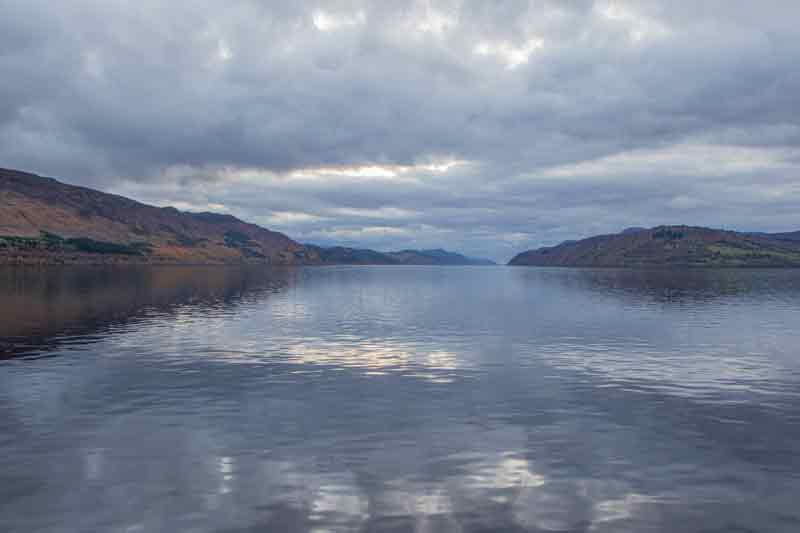
True, they say that the monster comes to life only every 45 years, and the rest of the time it falls into an anabiotic sleep. Nessie then wakes up to hunt in the lake at a depth of 200 metres. Ichthyologists discovered giant schools of fatty Atlantic herring. How does it get there from the open sea? Most likely through the karst caves communicating with it.

Of course, the scientific community almost completely deny the existence of the ancient plesiosaur sleeping at the bottom of Loch Ness. There is no 100% confirmation of its mythical nature, but people continue to believe in the existence of Nessie. That is why attempts are regularly made to lure the elusive monster to the surface. One German enthusiast poured 10,000 kilograms of bait – crumbled bread into the lake. And the second, armed with a gun that fired sleeping bullets, went underwater hunting in an original submarine. This hunt, which took place in 1987, was watched by hundreds of people. The “prey” of journalists armed with cameras produced suggestive photographs with unclear outlines under water at a depth of 78 metres.
“Dinner is served!” — what they will eat and drink in Scotland
It’s impossible to come to Scotland and remain hungry! But it’s best not to waste your time on food that you can eat in another country, but try to eat purely national Scottish dishes.
How do you like, for example, haggis which was adored by the poet R. Burns and sung by him in poetry and in the Scots folk song? The pudding, after which a famous brand of sheep’s stomach is named, is incredibly rich, aromatic and tasty. But it would be better if you didn’t know what this hot delicacy is made from: it’s a sheep’s stomach stuffed with oatmeal, grated onions, calf entrails, cow’s liver and her kidney fat. All this repulsively coloured minced meat is generously seasoned with nutmeg, black pepper and the secret spices of Scottish chefs.
Haggis can usually be enjoyed at Christmas without any problems. It is better to wash down food so dense for the stomach with a traditional drink for this country of 40-degree strength: whiskey. The average Scot drinks at least 9 litres of whiskey per year.