by
by 
Charlestown
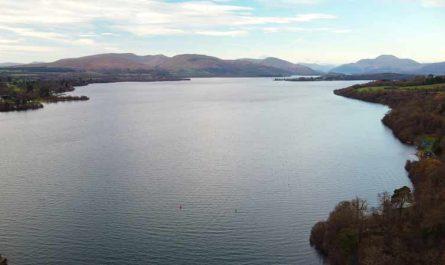
Today we will walk through a beautiful place in Scotland which is located on the northern coast of the Firth of Forth and is called Charlestown village. Charlestown is located 1 mile from Limekilns and 3 miles from Dunfermline.
Dunfermline is the ancient capital of Scotland and a Royal Burgh, the final resting place of several kings of Scotland and the birthplace of Andrew Carnegie. This city is famous for the Carnegie Museum and Dunfermline Abbey.
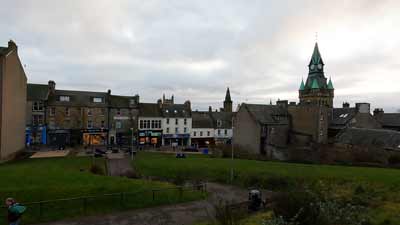
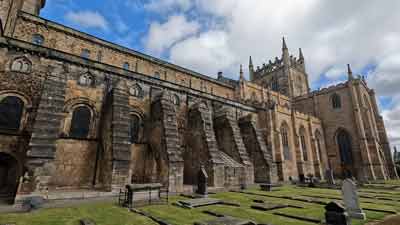
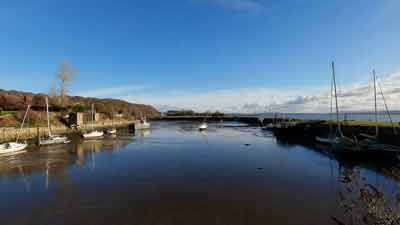
I start my walk from the top of the village. It is an oasis of Scottish flair, surrounded on one side by the sea and on the other by hills.
Beginning of the walk
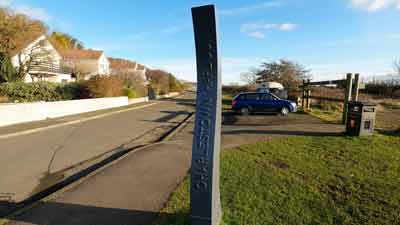
… So, as you can see for yourself, the historic place built by Earl Charles Bruce Elgin in in 1756 in the form of the initials of his name and surname – the letters C and E, meets me quite hospitably. The blue-blue sky and the cheerful sun illuminate my path along a road that is very decent in width and condition.
Like the vast majority of rural settlements in Scotland which I managed to see with my own eyes Charlestown is very well-kept and surprisingly quiet. Do you feel it too, what an infectious peace there is here? With each new walk, I become more and more convinced of the special mentality of the Scots, which impresses me with its regularity, thoroughness and leisurely pace: these three qualities are persistently present in their country life.
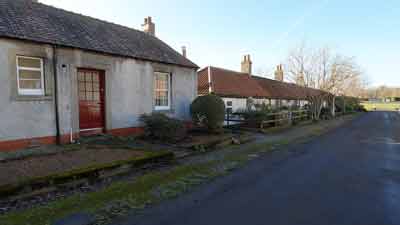
And so, from my very first steps in Charlestown, succumbing to its charms of tranquillity, I look with pleasure at the colourful landscape of this rural wilderness. Oh, I use the word “wilderness” in the sense that it was as if time had stopped here, as if I had found myself in a reality parallel to, for example, lively Glasgow. Here the wilderness is majestic and noble, full of self-esteem.
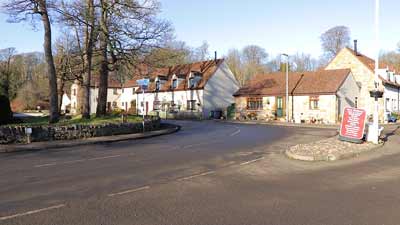
Do you see these neat low-rise houses on the sides? How do you like the evenness of the lines, the absence of debris, the cute low fences, the attractive grey roofs and the magical chimneys which create the illusion of falling into the Middle Ages? In some mystical way, I pass myself through two time streams of history: today, with its high technologies, and a thousand years ago, with an atmosphere of chivalry. And the second, made up of archaic architecture, strongly suppresses the first represented by expensive foreign cars and neat containers for separate waste collection. I feel as if I am being pulled into a whirlpool of a time of centuries past!
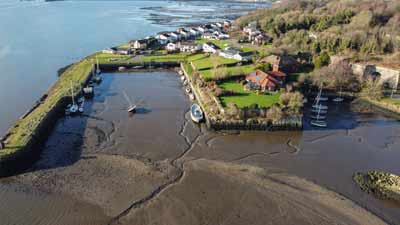
I would love to live in such a fantastic wilderness: look how well-groomed everything is around me! The pleasure of my leisurely walk is enhanced by the salty breeze from the coast of the Firth of Forth. Today it is in full swing so it is as if nature has specially prepared itself to meet me in order to show off this pretty place in all its glory.
Well, dear Charlestown, you managed to win me over from the first second, setting my thoughts on the anticipation of something incredibly exciting. And it seems that I’m already getting close to it: lime kilns, a local landmark.
I can imagine what a childhood used to be here and could be like: hardworking Charlestown was actively engaged in the past in the extraction of minerals: coal and limestone. This is what the active Lord Charles Elgin lived for and it was because of this that he founded the village.
A bit about stoves
But let’s get back to stoves. They were built around the 18th century. It is impossible not to hold your breath from the enormousness of its bulks, standing on a hillside, facing the coastline. I can imagine how much hard work Charlestowners had to do here, carving huge slabs out of dirty grey sandstone. But they built, of course in good conscience: the giants are standing and it seems that with the love of antiquity inherent in Scotland almost three hundred year old stoves will stand for the same amount, if not more.
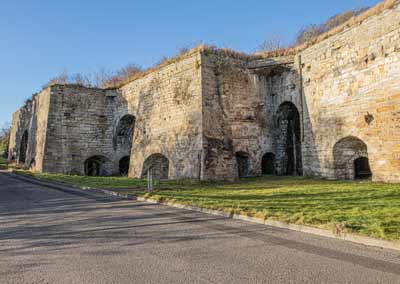
By the way, furnaces were also the property of Count Charles Bruce just like coal mines and limestone mines. Now these non-functioning objects have a different status: a monument to the country’s industrial revolution. The monument is included in the official list of state-protected antiquities of Scotland and, of course, constantly attracts tourists like me who like to look at real objects from a very distant era.
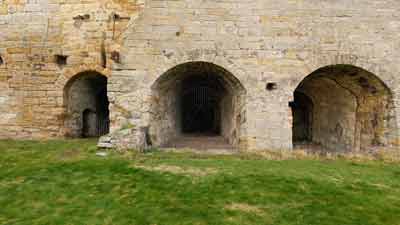
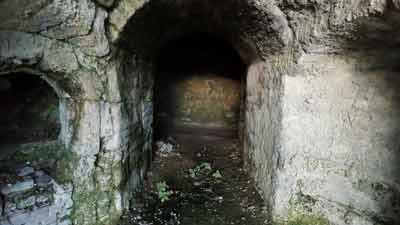
For some reason these furnaces caused an anxious feeling close to panic in me. Perhaps the atmosphere here is still saturated with the titanic labour of workers shedding sweat whose skin was red-hot from the heat of burning furnaces in winter and summer. By the way, there are a lot of them here: 14 pieces. I can’t imagine how much lime was mined here so that these 14 giants would regularly burn day and night – but in official sources I read that a third of the country’s limestone was burned in kilns.
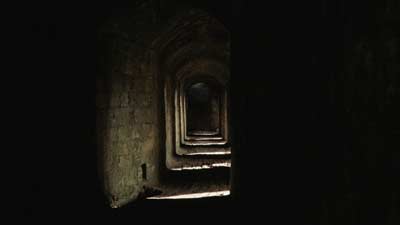
I hope the camera gives you the scale of these huge man-made structures: they are 110 metres long and 10 metres high. I had never seen a metal-melting blast furnace, but these phenomenally large lime kilns blew my mind. By the way, the furnaces that went out in 1956 are still in good condition today although they are not currently used for their intended purpose. But they say the inhabitants of Charlestown would have a desire – and their wonderful furnaces can burn limestone again, no worse than 100, 200 or 300 years ago.
Back to the future
… So my little trip to the village which left a vague feeling of unreality, came to an end. Two opposites have merged too much: the era of progress of the 21st century and the carefully preserved historical heritage of Scotland “peeping out” from its past.