by
by 
Edinburgh
Edinburgh‘s Old Town’s busiest tourist location is in its centre: the Royal Mile – numerous streets woven into a major thoroughfare. In fact, this is the heart of the Scottish capital and it is here that visitors to the country first rush to visit the numerous pubs, souvenir shops, shops, restaurants, national museums and other places which allow you to get a better sense of the country’s flavour.
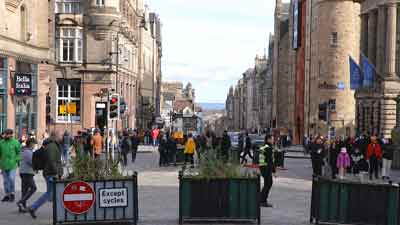
The Royal Mile descends downhill for the distance of a mile: that’s where the literal transfer of the name came from in 1920. The Mile starts with the colourful Edinburgh Castle and ends with the Scottish Parliament (the remodelled Palace of Holyrood). That’s why the one-mile-long highway was dubbed the Royal Highway because it is the seat of the Scottish monarchs.
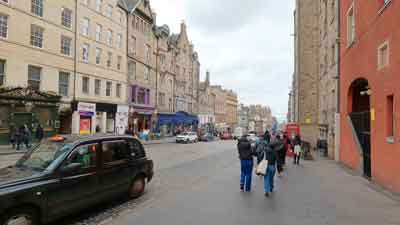
High Street and the John Knox Museum
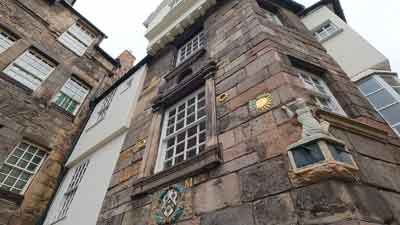
We are now on the High Street, the lower part of the Mile. It is interesting for one landmark: the four-storey John Knox House. The picturesque structure, eloquently dubbed “The Abode of the Rebel”, once belonged to the religious reformer John Knox. But no one knows how long the infamous John lived there. Only one fact is certain: the “Rebel’s Abode” became the place of Knox’s death.
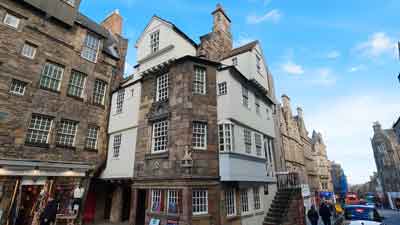
The old building was turned into a museum in memory of the great man. Enter it and you’ll be instantly immersed in the atmosphere of the 16th century right outside the door. Oh, there’s a lot to see here: the original interiors and ceiling paintings are worth a look: this is how the houses of wealthy Scotsmen looked five centuries ago. In general, John Knox’ house is a must-visit – such an authentic place makes a great impression on modern people! It is like a time machine that transports you back to the Middle Ages. Finally, the “Abode of the Rebel” is interesting not only for those who want to see the Scottish dwellings of centuries ago with their own eyes, but also for those who want to learn more about the extraordinary personality of John Knox.
The second must-see place on the Royal Mile is People’s Story. The museum’s eloquent name says little about its uniqueness – in fact it does a phenomenal job of presenting the historical milestones of ethnic groups who have lived in Edinburgh since the foundation stone was laid. Reliable information has been meticulously collected by historians bit by bit: thousands of oral histories of old residents have been listened to, thousands of surviving manuscripts have been re-read – the material allows you to mentally penetrate the life of infinitely distant centuries.
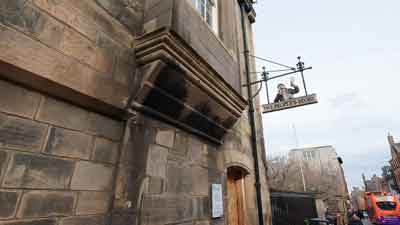
After informative excursions to the Old Town’s iconic locations, it’s not a bad idea to try something of its unparalleled cuisine! Let’s start our gastronomic acquaintance with pubs: in these you can not only have a good drink, but also a good snack. Naturally in such establishments the menu includes only tasty, hearty and unique dishes of Scottish cuisine. They complement traditional whisky or local strong beer splendidly. And talkative local regulars will gladly tell a couple of tales about their cosy town. Rest assured, there will be heartwarming stories about spirits from ancient castles, national heroes who did inhuman, but glorious deeds and many other amazing things.
Holyrood Palace
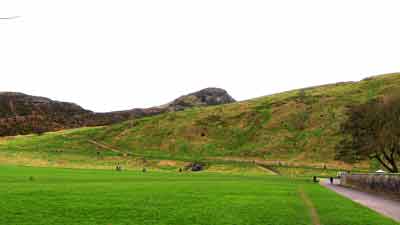
And now we come to the final part of the itinerary – Holyrood Palace. It is located at the very end of the Royal Mile, opposite the Scottish Parliament and the impressive backdrop of Arthur’s Seat.
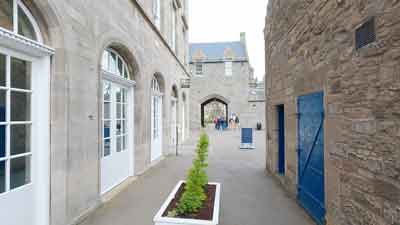
Holyrood Palace is the official residence of the reigning monarch when visiting Scotland. Once the home of Mary Queen of Scots, this stunning building and picturesque surroundings have hosted some of the greatest figures in Scottish history.
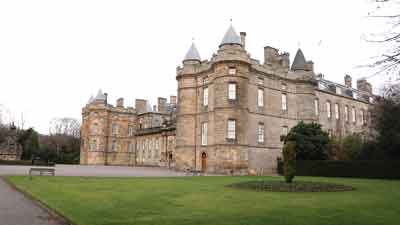
Built between 1671 and 1678, the palace has been at the epicentre of Scottish royalty since the 16th century. When Edinburgh became the official capital of Scotland, ancient kings chose to live in the beautiful and serene Holyrood Abbey rather than atop the exposed Castle Rock. From James II and Charles I to handsome Prince Charlie and Queen Victoria, each monarch has had a unique influence on the creation and preservation of the palace. The Palace has experienced a number of dramatic and important events throughout its history and is inextricably linked to major events in both Scottish and British history. The palace was once the headquarters of Handsome Prince Charlie during the rebellion in 1745 which is one of several dramatic events in the palace’s colourful history.
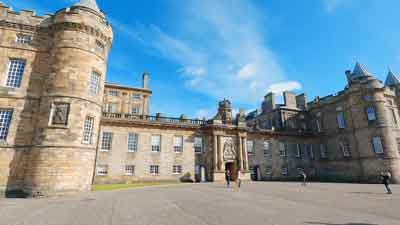
In 1501 James IV built a palace for himself and Margaret Tudor and James V saw to it that a huge tower was added between 1528 and 1532. Mary Queen of Scots returned to Scotland after the death of her husband Francis II, King of France and would spend much of her turbulent and dramatic life in the palace.
The palace was renovated in 1633 in time for the Scottish coronation of Charles I in that year and during the Civil War the palace was badly damaged by fire. Queen Victoria, after purchasing Balmoral Castle, reintroduced the custom of staying at Holyroodhouse. Her return to the use of the Palace was the catalyst for ensuring that the Palace was refurbished and renovated.
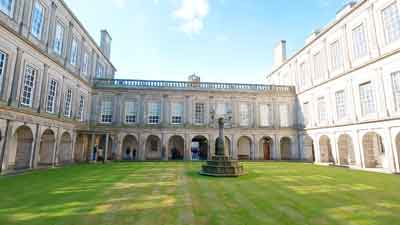
In the 20th century, King George V and Queen Mary ensured that the restoration and renovation program continued and the palace came to be regarded as a family home. Among the improvements added during this time were the installation of electricity, lifts and bathrooms – they also started the time-honoured tradition of holding garden parties in the palace.
Holyroodhouse consists of rows surrounding a rectangular courtyard, one of which dates from the 16th century, rises to four storeys and has towers topped with conical roofs. The walls of the older section are pierced with hinges. The large carved fountain in the courtyard in front of the palace dates from the mid-19th century.
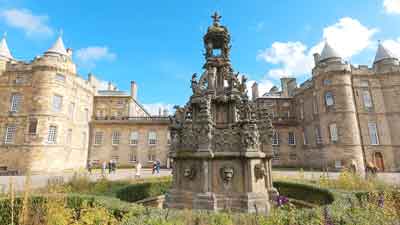
Holyrood Abbey was founded by David I around 1128 although it was sacked by the English in 1322 and 1385. James II was born at Holyrood in 1430 and was married and buried here. James III found the Abbey’s guest complex a convenient alternative to Edinburgh Castle and James IV and James V enlarged the building. Finally, the Abbey was the site of another landmark event: in 1503 James IV and Margaret Tudor were legally wed at the Abbey.
The gardens have been radically transformed since 1503. Firstly, the first palace of the king (at that time – James IV) appeared in them, and, secondly, this circumstance led to a change in the official status of Holyroodhouse: it became the main royal residence of the monarchs of Scotland. The gardens, in which a large menagerie and tennis court had been built, were used by famous hunters and the nobility, for whom tournaments, falconry and other outdoor entertainments were regularly held.
By the time Mary Queen of Scots lived in the palace there were a number of walled gardens including the walled Secret Garden to the north. Mary often practiced archery, falconry (for which wild falcons were brought from France), bowling and tennis in the garden.
Holyrood Palace Garden
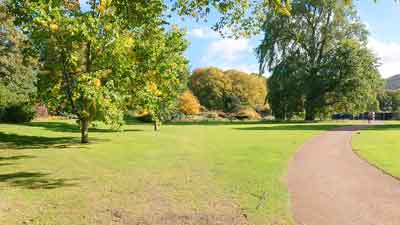
A new public garden with three distinct areas, each representing a stage in the palace’s 900-year history opened in 2020 and is used by school and community groups to explore how plants have been used to improve health and wellbeing.
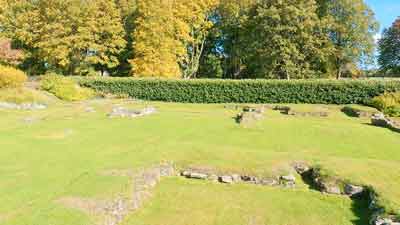
The beautiful regular gardens cover 10 acres and are cultivated by an experienced team. They are in stark contrast to the wild natural backdrop of Arthurs Seat. This was once a monastery garden where monks grew plants for food and cultivated medicinal herbs for use in the infirmary.
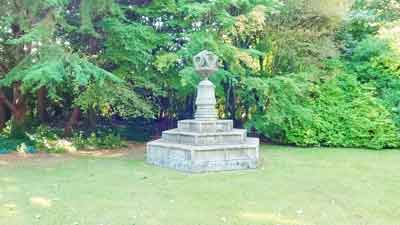
Note the sundial, believed to date from 1633, the year of Charles I’s coronation. It would once have stood in the formal secret garden of the palace.