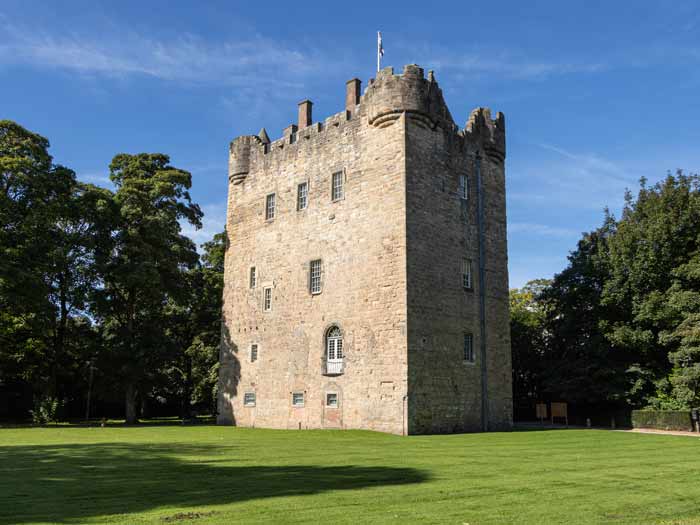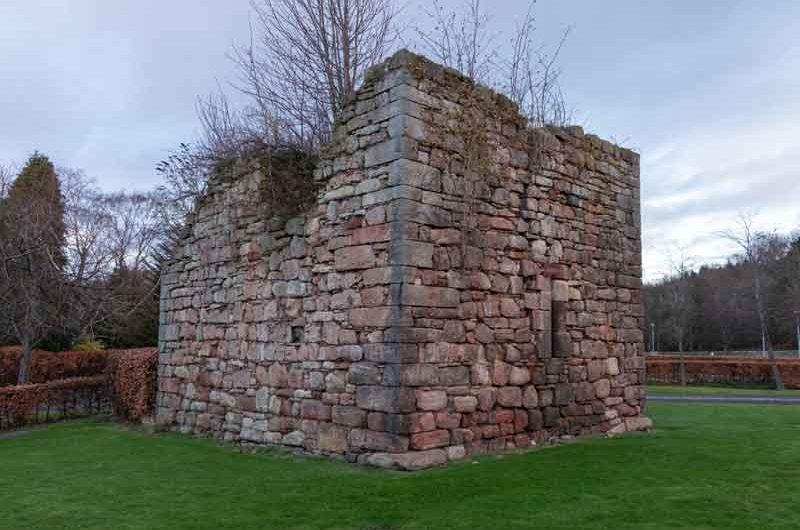
Craiglockhart Castle, Edinburgh, Scotland
 by
by The enigmatic Tower House Craiglockhart Castle, located on the campus of Edinburgh Napier University’s Craiglockhart site on Colinton Road in the southwestern part of Edinburgh, …
TRAVEL WITH US

Almost the 10th largest city in the United Kingdom and, concurrently, the official capital of Scotland, Edinburgh is very old and has a rather long past. The history of Edinburgh begins in the 7th century with the arrival of the first settlers led by Aideen, the British royal family, who built a castle-fortress here.
From written sources (charters) that have survived to this day it is reliably known that in 1124 the settlement received the status of burgh (city) by decree of King David I who founded the Church of the Holy Cross in Edinburgh. Since the 12th century, very “bright” pages have appeared in the history of Edinburgh: the city, conveniently located on the southern shore of the Firth of Forth, began to develop rapidly. Of course, an objective factor contributed to its rapid growth: King David I, nicknamed “The Saint,” moved the Dunfermline royal residence to Edinburgh Castle, thereby turning it into an epicentre for administrative life.
The special position of the royal city was further strengthened in the 13th century. This was facilitated by the appearance of a parliament in Scotland: it was this that in 1437 formally “made” Edinburgh the capital of the state.
The royal court at the Palace of Holyroodhouse in Edinburgh ceased to exist in 1603 when the reign of Mary Stuart ended with the transfer of the throne to James VI who decided to move to London.
… The enormous political influence over the country diminished in 1707. This was a natural consequence of the abolition of the independent Scottish Parliament. But the “political decline” did not affect the cultural life of Edinburgh residents at all! The city flourished during the Age of Enlightenment and became famous for many world-famous philosophers, writers and scientists.
Edinburgh has experienced a real boom as a result of an increase in the number of its citizens since the second half of the last century. Of course, an increase was caused when Irish emigrants fled to the wealthy city in order to escape the “Irish potato famine” (more than 1,000,000 Irish emigrated and the same number died).
Edinburgh still benefits from the economic boom in the 21st century which peaked in 1999. Then Parliament was restored and the city became the epicentre of political life again. Employment has increased significantly (including at the expense of government agencies) and even in the 20’s of this century unemployment in Edinburgh is considered to be the lowest compared to other settlements in Scotland
The enigmatic Tower House Craiglockhart Castle, located on the campus of Edinburgh Napier University’s Craiglockhart site on Colinton Road in the southwestern part of Edinburgh, …
Nelson Monument The Nelson Monument located on Calton Hill in Edinburgh is a striking structure designed by architect Robert Burn and built between 1807 and …
In Clackmannanshire, in the central part of Scotland is a small, but very picturesque and interesting town known for its ancient monuments called Alloa. It …
Edinburgh Castle Edinburgh Castle is one of the oldest buildings in Scotland. The rich history of this amazing place, the unique architecture displaying the “face” …
The start of my journey Outside the window the bright sun is shining, birds are singing and tree leaves are playfully rustling. On such a …
Calton Hill Today we will take a stroll through another wonderful place in Edinburgh which is known not only as a place with a rich …
Edinburgh Edinburgh‘s Old Town’s busiest tourist location is in its centre: the Royal Mile – numerous streets woven into a major thoroughfare. In fact, this …
Journey to Hopetoun House The warm season is the perfect time to go out for a walk, get some fresh air and enjoy nature which …
Today is a special day because my old dream is about to come true: to see Dirleton Castle live, with my own eyes. I’ve heard …