


 by
by 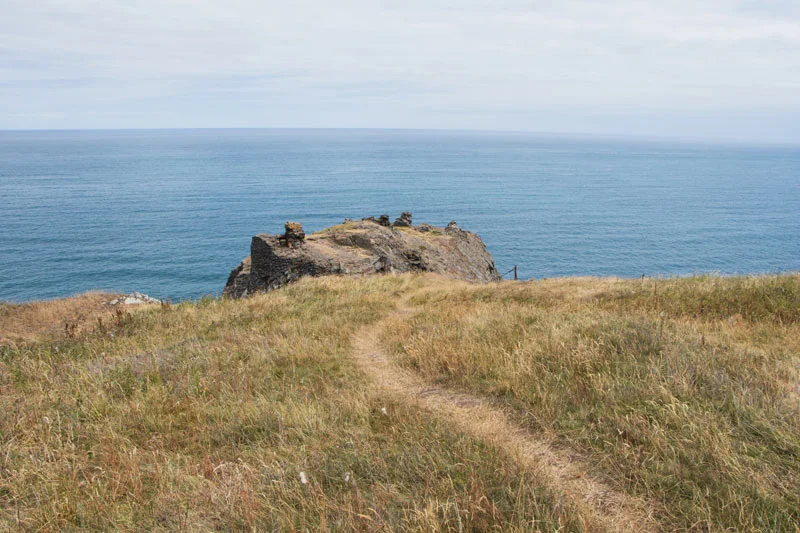
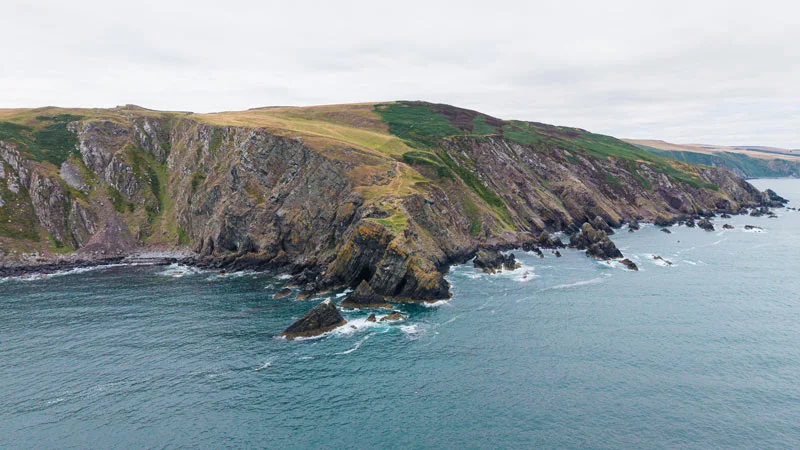
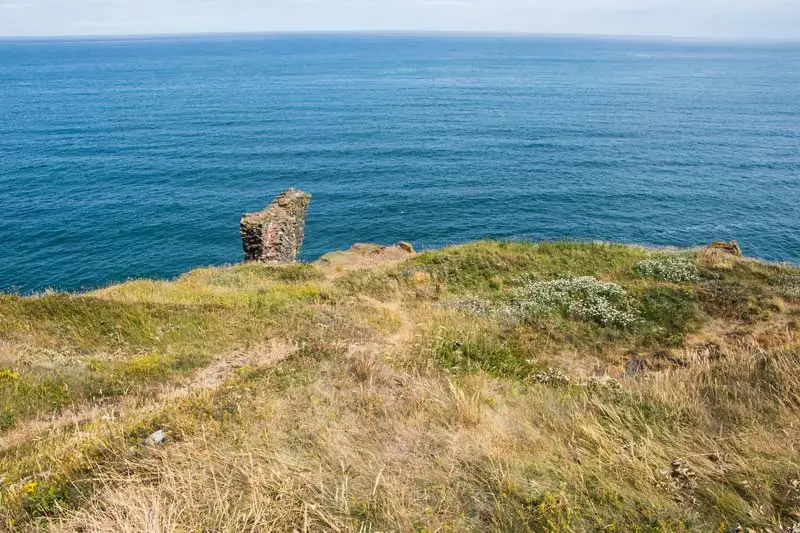
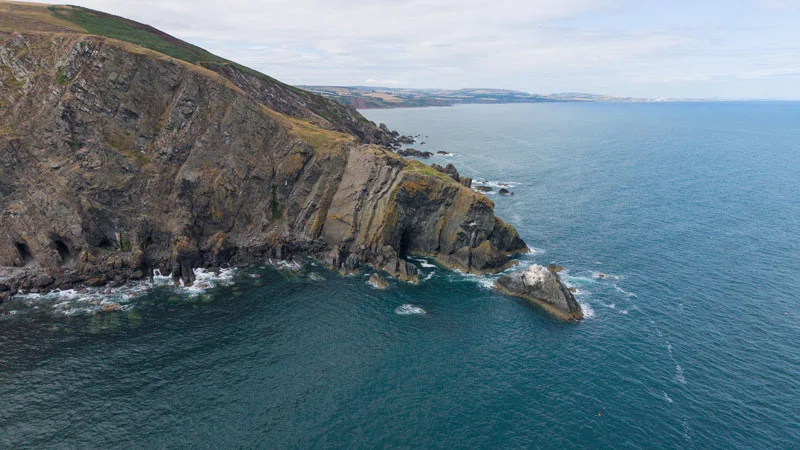
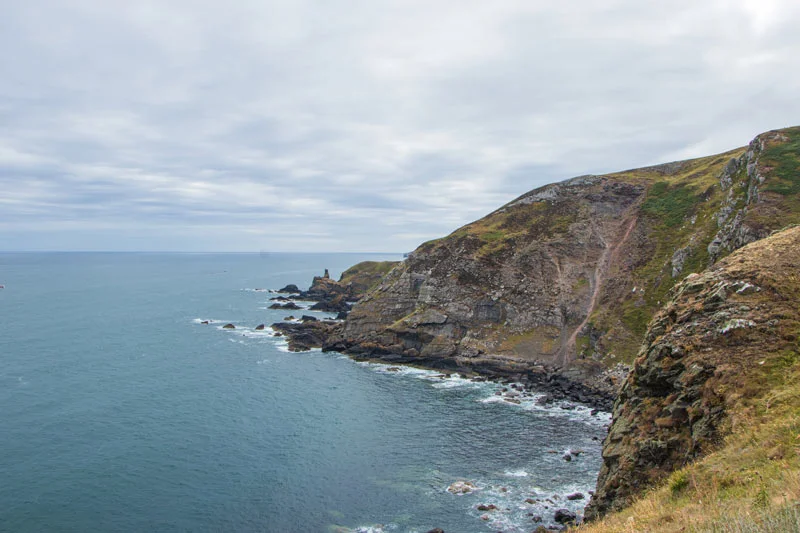
The ruins of Fast Castle are the remains of a mediaeval coastal fortress situated on a narrow rocky headland in Berwickshire, southeastern Scotland. The site is striking not so much for its surviving walls of which very few remain, but for its extreme location with its sheer cliffs which plunge straight into the North Sea on all sides.
Location and appearance
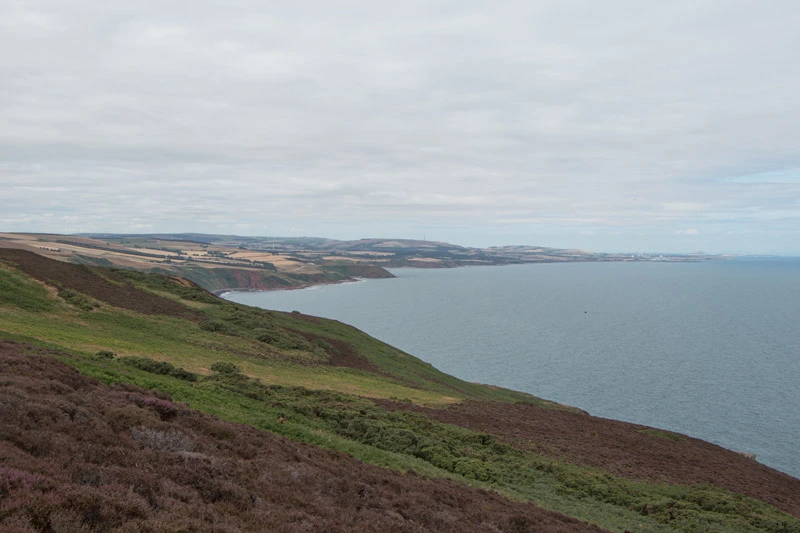
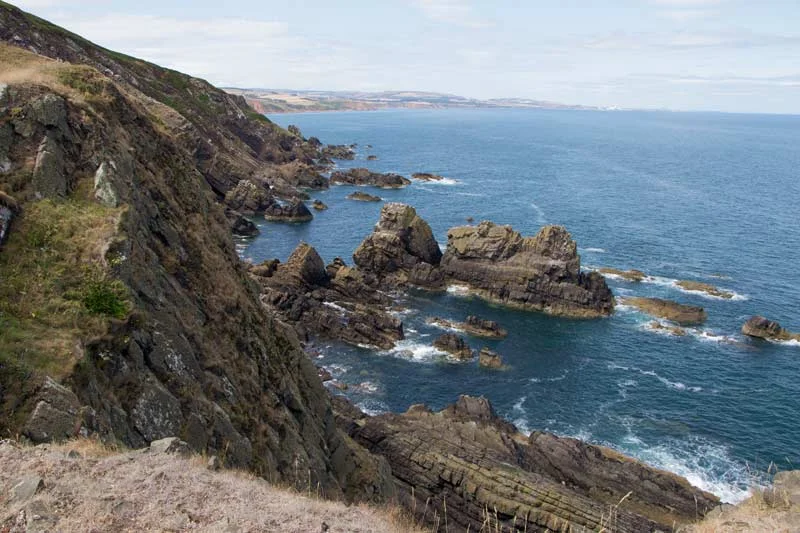
The castle is located on the headland of Fast Castle Head approximately 5 – 6.5 km northwest of St Abbshead and northwest of Coldingham. The site on which the castle stands is a narrow rock outcrop surrounded by near vertical cliffs – the drop reaches about 45 metres from the landward side and up to 90 metres in certain sections on the seaward side. Telegraph Hill which is 173 metres high rises steeply behind the headland.
Today the castle is mostly represented by stone foundations and scattered wall fragments across the surface of the headland. In former times it featured a keep, a gatehouse at the approach, a curtain wall with an inner courtyard and several buildings. Part of the stone was likely quarried directly on-site as evidenced by quarry-like excavations on the platform.
How to get there
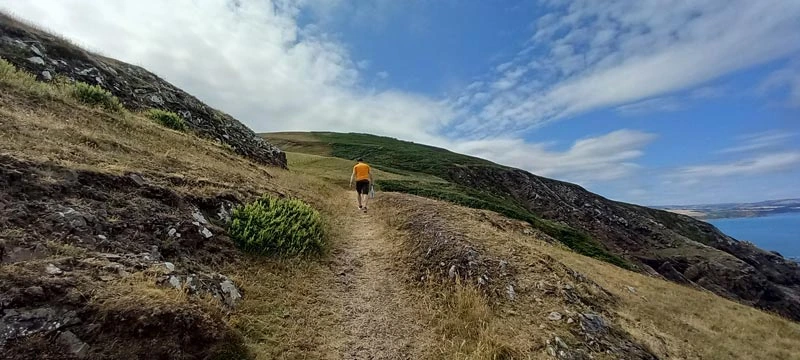
The route to Fast Castle begins from a small parking area near Dowlaw Farm. To get there you need to turn off the A1107 road east of Old Cambus (northwest of Coldingham) and drive along a narrow secondary road for about two miles (approximately 3 km) to the farm. Signposts lead directly to the farm rather than to the castle. There is a well-defined path about 1.2 – 1.5 km long which leads to the ruins from the parking area.
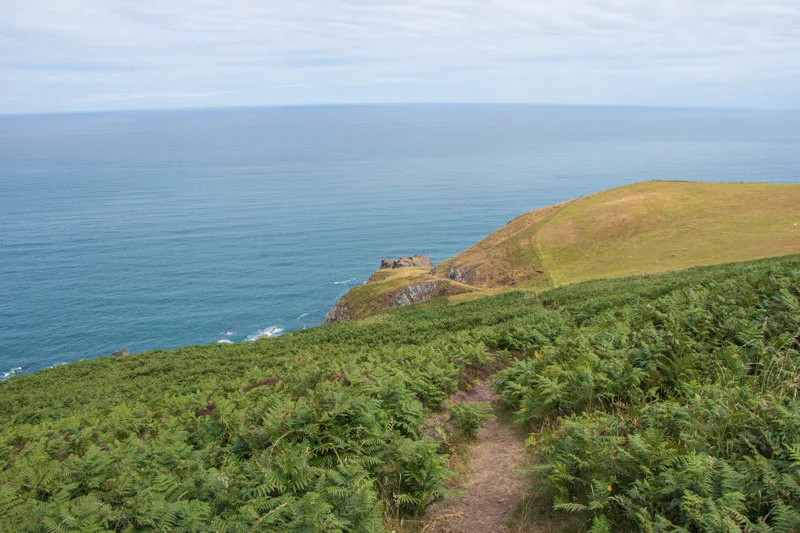
The route runs across grassy fields and then along the edge of the cliffs and gradually descends. Overall, the walk takes 15 – 30 minutes each way depending on your pace. The return climb requires noticeable effort – you need to ascend approximately 120 metres from sea level to the highest point of the trail.
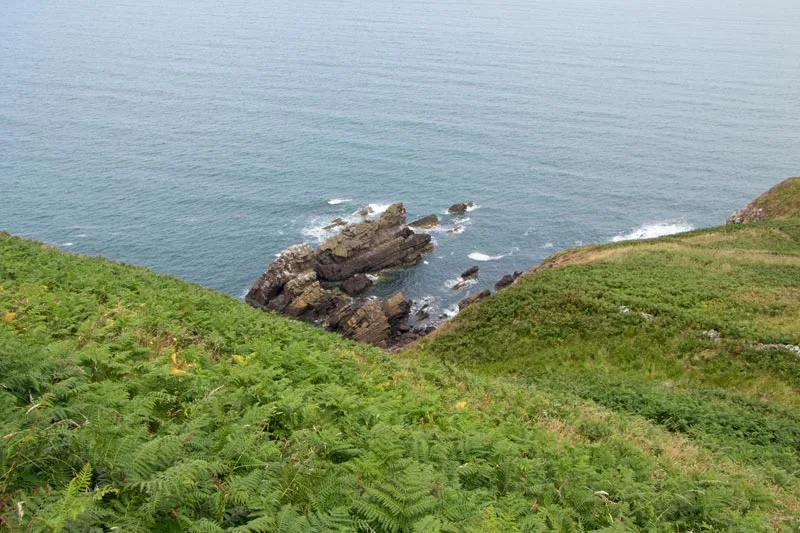
The path is generally comfortable, but there are steep and occasionally slippery sections especially close to the cliffs. Sturdy footwear is recommended and caution should be exercised near the edge of the drops as there are virtually no safety barriers.
Approach to the ruins – the bridge and the “hard step”
Originally, the castle site could only be accessed via a drawbridge across a narrow chasm. Today it is crossed by a concrete walkway with rusty posts and chains which create a false sense of security as a fall from it remains extremely dangerous. This crossing was already referred to as “modern” back in 1921 and today it looks quite intact.
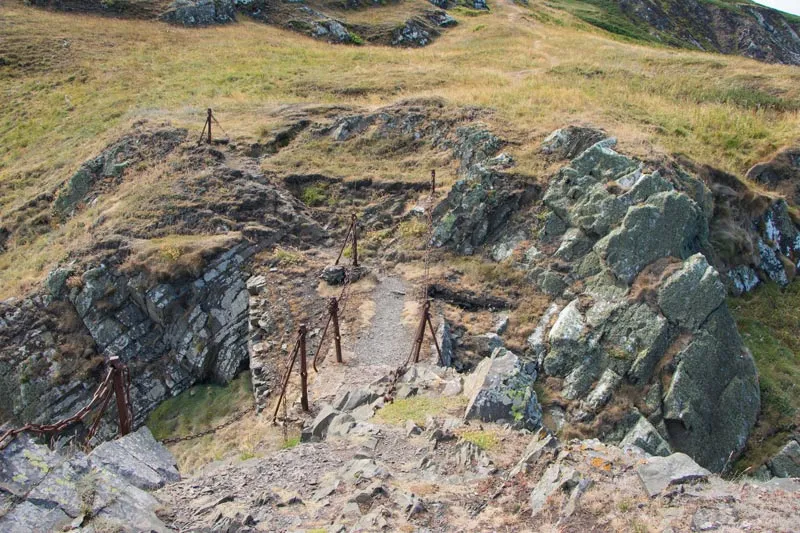
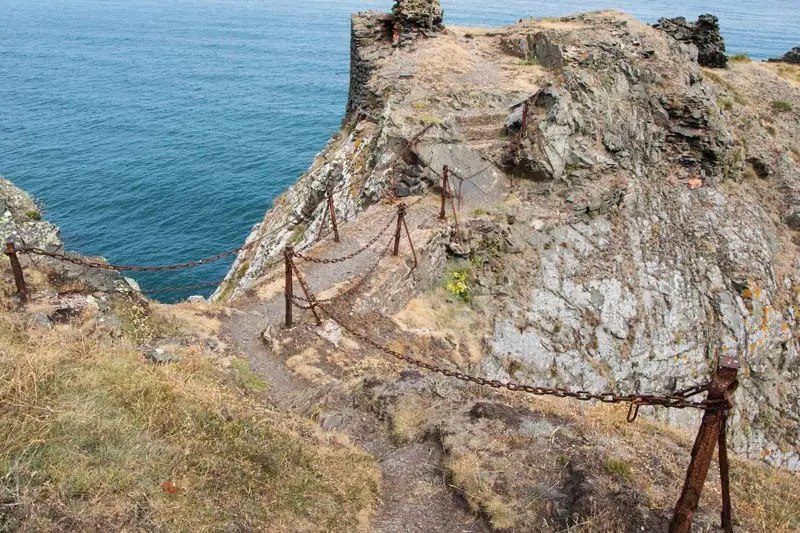
Visitors face the so-called “hard step” at the end of the bridge – a smooth, sloping stone slab about a metre high that one must climb up to reach the concrete steps which lead onto the castle grounds.
What to see on site
The surface is far from even on the rocky platform – a gatehouse guarding the entrance was located on the landward side, a keep on the southern side and further on the platform slopes steeply down past traces of former buildings and potential quarries. The upper part of the headland was once encircled by a curtain wall forming a sloping courtyard where additional buildings stood.
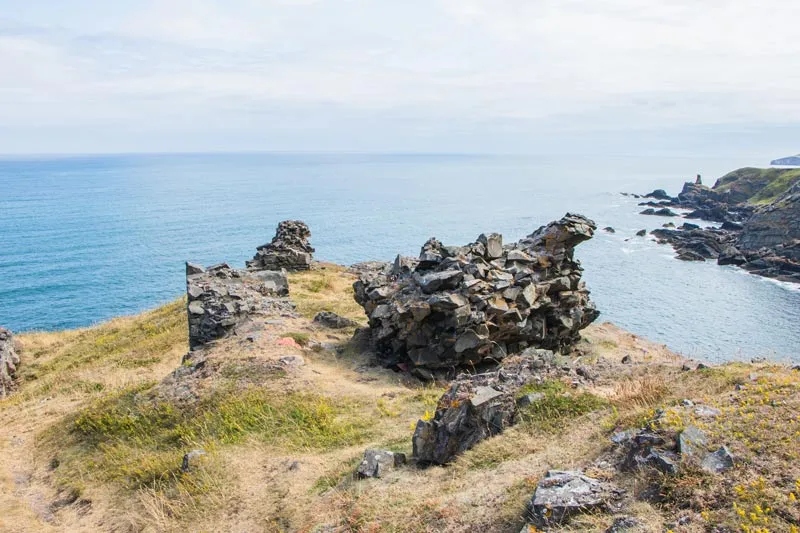
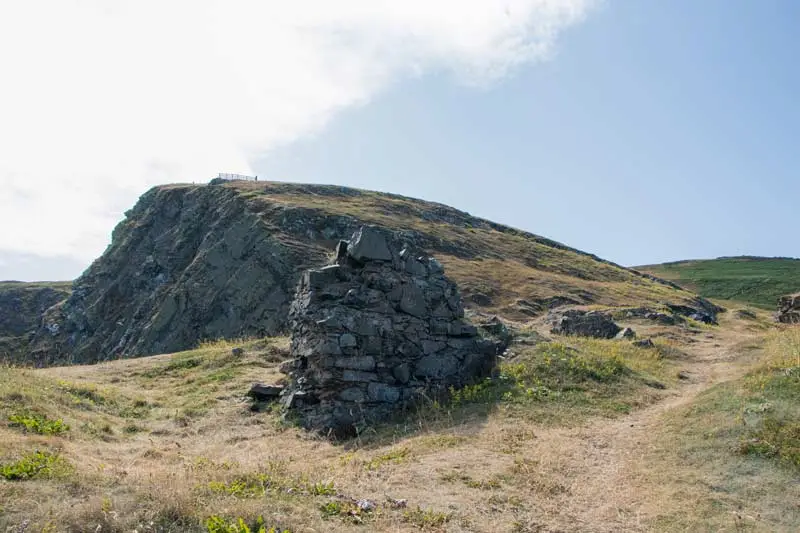
Only fragments of the walls and towers survive – pieces of masonry indicating the site of the keep and individual sections of the curtain wall running down toward the sea. There are almost no information signs on-site, so much has to be reconstructed using the plan of the ruins and imagination. There are various theories about possible access to the sea and some sources suggest the use of a basket and pulley system lowered from the cliffs while others mention a legend of a tunnel leading down to a sea-level cave which could have been used by the castle’s inhabitants and later by smugglers.
Brief history of the castle
Although the exact construction date of the original castle is unknown the site was likely used as a fortified settlement as early as the Iron Age. The first written record of the castle dates back to 1333. In 1346 it was seized by English forces after the Battle of Neville’s Cross. In 1410 the castle was captured by Patrick Home (or Patrick Dunbar as names vary in different sources) and it passed back under Scottish control.
One of the most famous episodes is connected with Margaret Tudor (daughter of English King Henry VII and sister of Henry VIII) in 1503 when she stayed at Fast Castle on her journey north where she was to marry the Scottish King James IV.
Destruction, seizures and restoration
Following the Battle of Flodden in 1515 the castle was destroyed during a power struggle between the Stewarts and the Homes. It was restored by the Home family between 1521 and 1522. In 1547 (during the “Rough Wooing” campaign of Henry’s English forces against Scotland) the fortress was captured once again by the English, but by 1566 it was back in Scottish hands. It was around this time that Mary Queen of Scots stayed here. The castle briefly passed back to the English in 1570.
Fast Castle was inherited by the Logans of Restalrig in 1580. According to legend they hired the mathematician and “wizard” John Napier to search the castle for hidden treasure, but nothing was found. In 1600 the Logan estates were forfeited to the Crown for involvement in a conspiracy against James VI after which the castle changed hands several times – passing to the Dunbars, Arnotts, the Homes again and the Hall family and rapidly fell into decay. By the 18th century, it was evidently already in ruins.
Records indicate that the keep was severely damaged by a lightning strike in 1871 and by the late 19th century even less of the castle remained than can be seen today. The ruins were designated as a protected monument in 1981.
Fast Castle and Walter Scott
The castle gained particular cultural prominence thanks to Sir Walter Scott – it was Fast Castle that served as the prototype for the fictional Wolf’s Crag in his tragic novel The Bride of Lammermoor (1819). Many visitors are unaware of this connection, but it adds another literary dimension to the site.
It is believed that Scott himself visited this area and his depiction of a gloomy fortress on the edge of the cliffs relies heavily on his actual impressions of Fast Castle.
Origin of the name and legends
The name of the place is associated with an old coastal practice – false lights were allegedly lit on the rocks at night to lure ships onto the reefs and then plunder them. This story is deeply woven into the local identity of the Scottish Borders and is frequently mentioned in descriptions of the castle.
Other legends are also connected with Fast Castle – for example, that the Earl of Bothwell may have hidden here and that royal treasures are concealed in the dungeons which Napier searched for in vain.
Practical tips for visiting
Fast Castle is an open, undeveloped site with no ticket offices, restrooms, cafes or other tourist amenities.
The path is slippery in places and runs right along the edge of the cliffs so sturdy footwear and caution are essential especially in windy or wet weather.
There are no safety barriers on the headland – approaching the edge of the cliff should be done only with a full awareness of the risks.
It is best to visit during daylight hours in good weather. Many recommend choosing a sunny evening when the rocks are illuminated by the low sun.
The parking area is small and free, but spaces are limited. It can fill up quickly during peak season and weekends.
Fast Castle remains one of the most dramatic and atmospheric castle sites in Scotland – even as sparse ruins it leaves a powerful impression thanks to its location on the edge of sheer cliffs, its turbulent history and its literary fame.


