by

Heriot-Watt Research Park
Walk and relaxation
During these challenging times of the pandemic and the virus, to lift my spirits, I decided to take a walk and share the story of a truly amazing and beautiful park in Edinburgh—Riccarton, or Heriot-Watt Research Park. Personally, I like it even more than Holyrood or the Meadows.
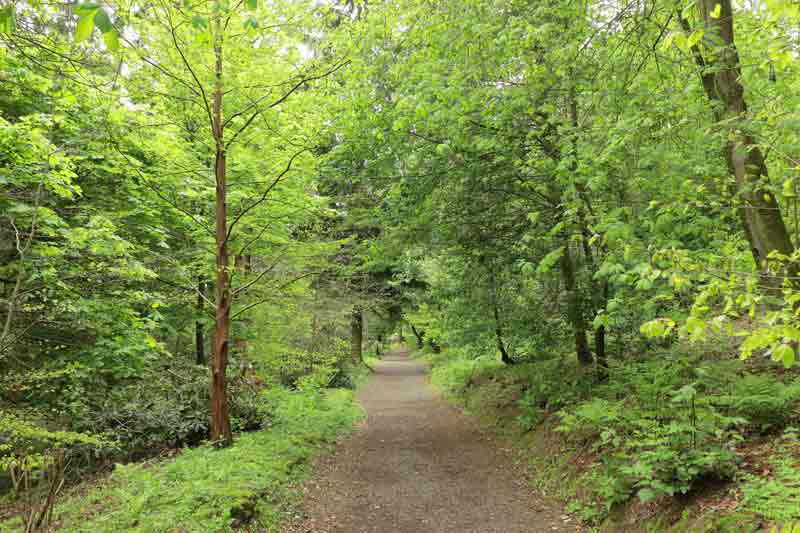
It has a wonderful atmosphere, beautiful nature, and fresh air. Even during term time, when the university is full of students, the environment still invites you to rest and relax.
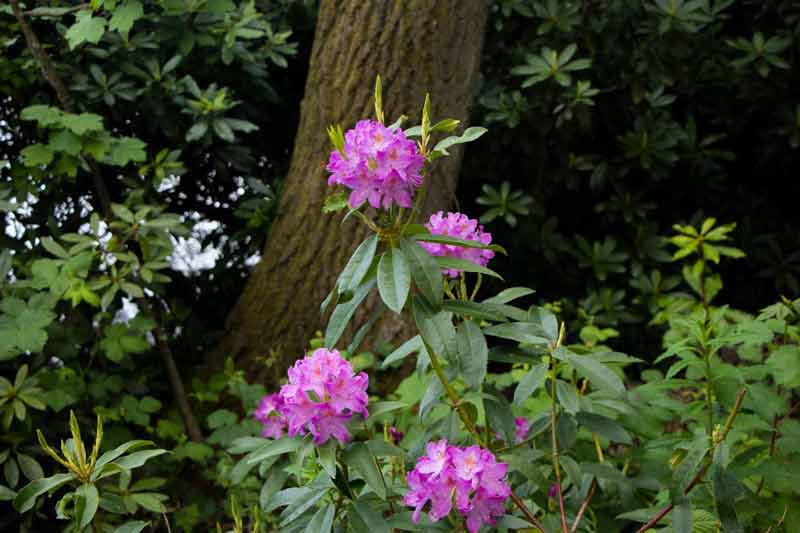
There is a small woodland, tiny streams, and walking paths that weave through tall trees.
Now, let me tell you a bit more about the park itself.
History and Development of the Park
In the 1960s, the expanding university decided to relocate all its departments from its original location in central Edinburgh to a new green site on the western edge of the city, south of the airport. The park was established in 1971 as an integral part of the new Riccarton campus. Currently, the developed area of the park is approximately 110 acres, with another clean area of 45 acres available for development.
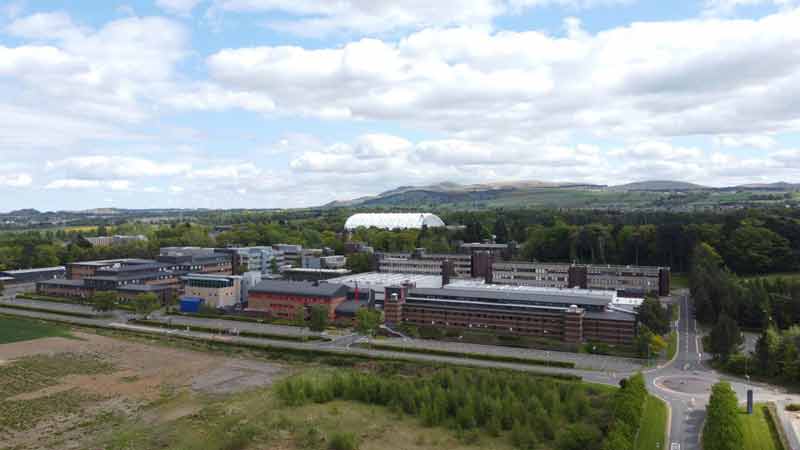
The aim of the park is to provide a place where interaction and collaboration between tenant company staff and university academic staff can take place with ease, thereby providing the most favorable conditions in which new industrial developments can be found, encouraged, and given the opportunity to grow.

The Research Park is an integral part of the Heriot-Watt University campus. The park’s development philosophy emphasizes that employees of tenant companies are considered part of the campus community and have access to all its facilities, such as restaurants, banks, shops, the staff club, and various societies. In addition, corporate-level access can be provided to shared campus services—ranging from libraries to computer hardware, printing, and central mail services.

If you walk a bit higher toward the main university building, even more beautiful landscapes open up.
The lawn, historical garden, and adjacent woodlands at the heart of Heriot-Watt University’s Edinburgh campus were originally laid out as formal gardens for a country house built in the 15th century.
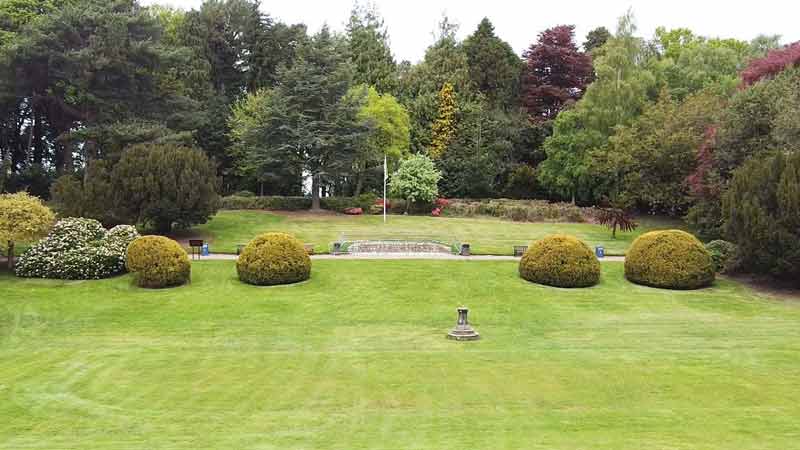
The formal gardens themselves were laid out in the 18th century in the prevailing “picturesque” style, while later owners continued to improve the land and added collections of exotic trees and plants. Thus, the garden design represents an overlay of several periods, and its maintenance takes into account historical features, conservation, biodiversity, maintaining a mix of native and exotic plants, and supporting local wildlife.
Since the university acquired the Riccarton estate in 1969, measures have been taken to preserve the tranquility and quality of the area, with the Edinburgh Campus Conservation Committee consulted on all aspects of conservation, landscape care, and management.
A beautiful, well-maintained lawn, established over 200 years ago and containing more than 38 plant species, along with dome- and drum-shaped yew trees, three mature woodlands enclosed by stone walls featuring Scottish and exotic plantings from a historical collection, and a walled private family burial ground.
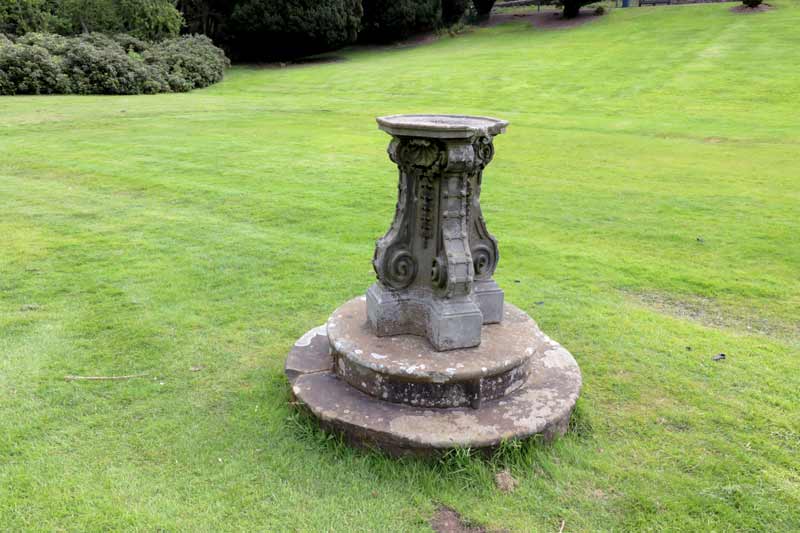
At the center of the lawn sits the oval base of a sundial that was removed in 1956.
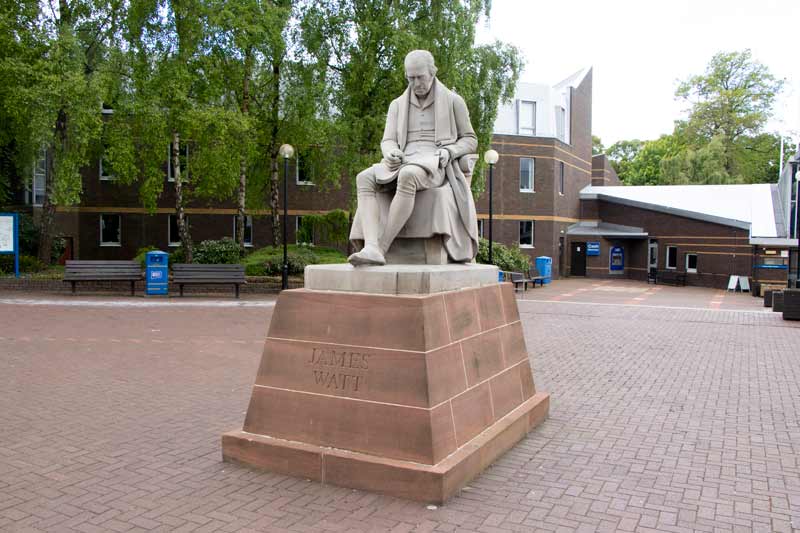
Perched on a red sandstone plinth is a figure of James Watt, who has been revered as an iconic role model since the earliest days of the Edinburgh School of Arts. This statue was created for the university’s predecessor—the Watt Institution and School of Arts—by Peter Slater, who taught ornamental modeling there. When the statue was unveiled in 1854, students and staff celebrated all night and established the Watt Club, now the oldest alumni association in the UK.